A composition appears on the page that I did not draw point by point. I can keep it, generate another, change a rule or select only the part that interests me. Calling all this “letting the system do it” is convenient. It hides how many opportunities I still have to intervene.
The final form can surprise the person who wrote the program. That surprise does not erase the decisions that made it possible, or those through which it is recognised as a result worth showing. Automation shifts the work to places less visible than the final drawing.
Before the first point
For this page I built a simple generator: forty points within a bounded field. A deterministic procedure derives their positions from an initial value, the seed. I show two results with different seeds and a third in which the distribution changes while the starting seed stays fixed.
Rule, beginning, result
The seed allows a sequence to be revisited when algorithm and parameters remain fixed. The p5.js documentation demonstrates this repeatability. The page’s small generator has its own implementation, disclosed in the code: it does not reproduce the library’s implementation.
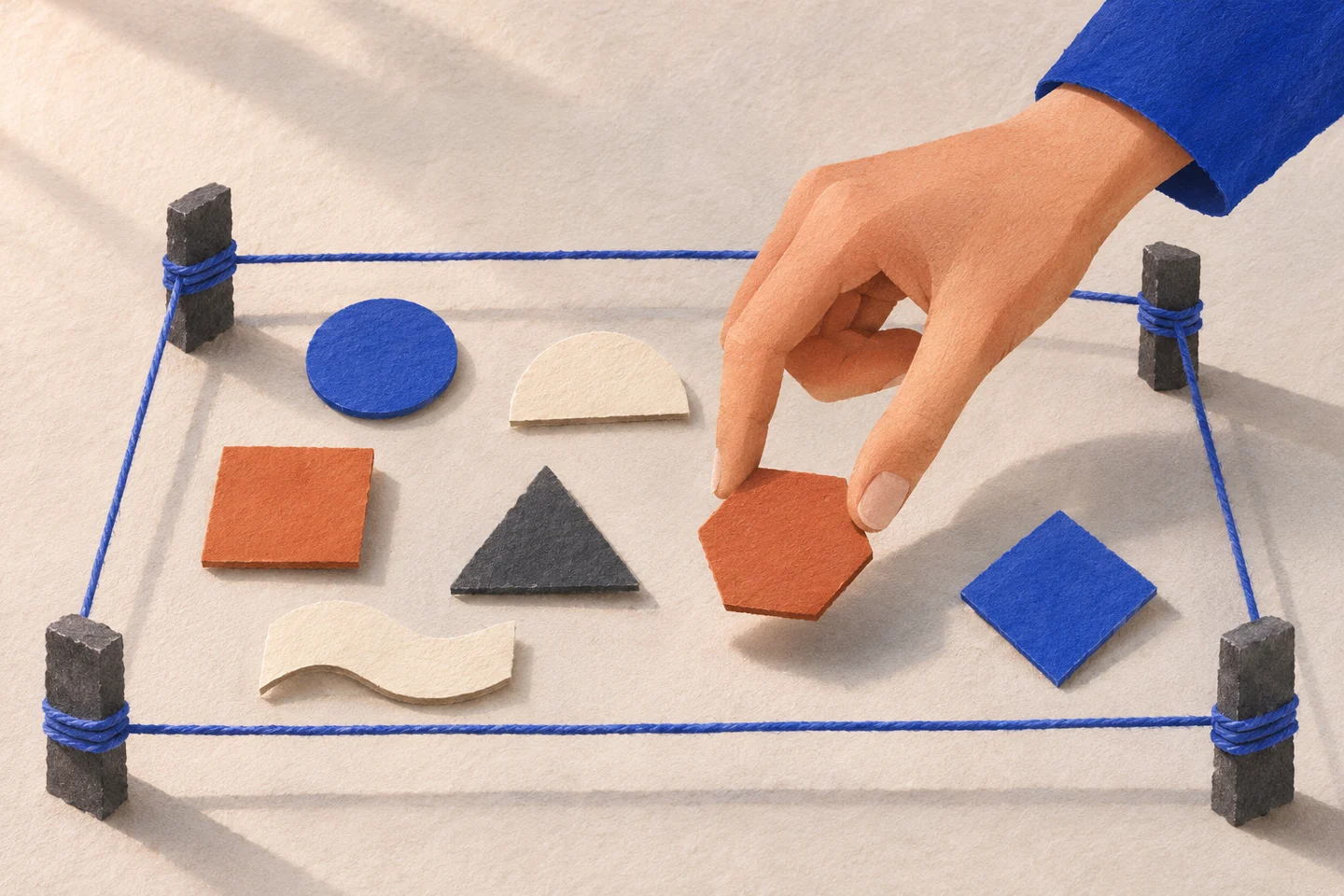
Before choosing any result I decided the perimeter, the number of points and the kind of transformation applied to the values. I could call the positions random and forget that no point can leave the field. That is a limit I imposed, even though I do not control every coordinate.
Selection leaves fewer traces
The work becomes harder to read when I show only the selected specimen. An isolated form does not tell whether it appeared first or was one of hundreds of attempts. The reader sees the object I gave a place to, while the series that made the choice meaningful remains hidden.
Choosing a result intervenes in the system even when it changes no line of the program. It decides what becomes public and beside which neighbours it will be judged. Strict selection can give coherence to a very permissive procedure, making forms appear necessary when they were only some among many possibilities.
This is no reason to stop choosing. Displaying every output indiscriminately can be an equally convenient way of avoiding responsibility. I would rather preserve enough information to make selection discussable: the criterion, a few alternatives and the parameters that bounded the search.
When another person enters
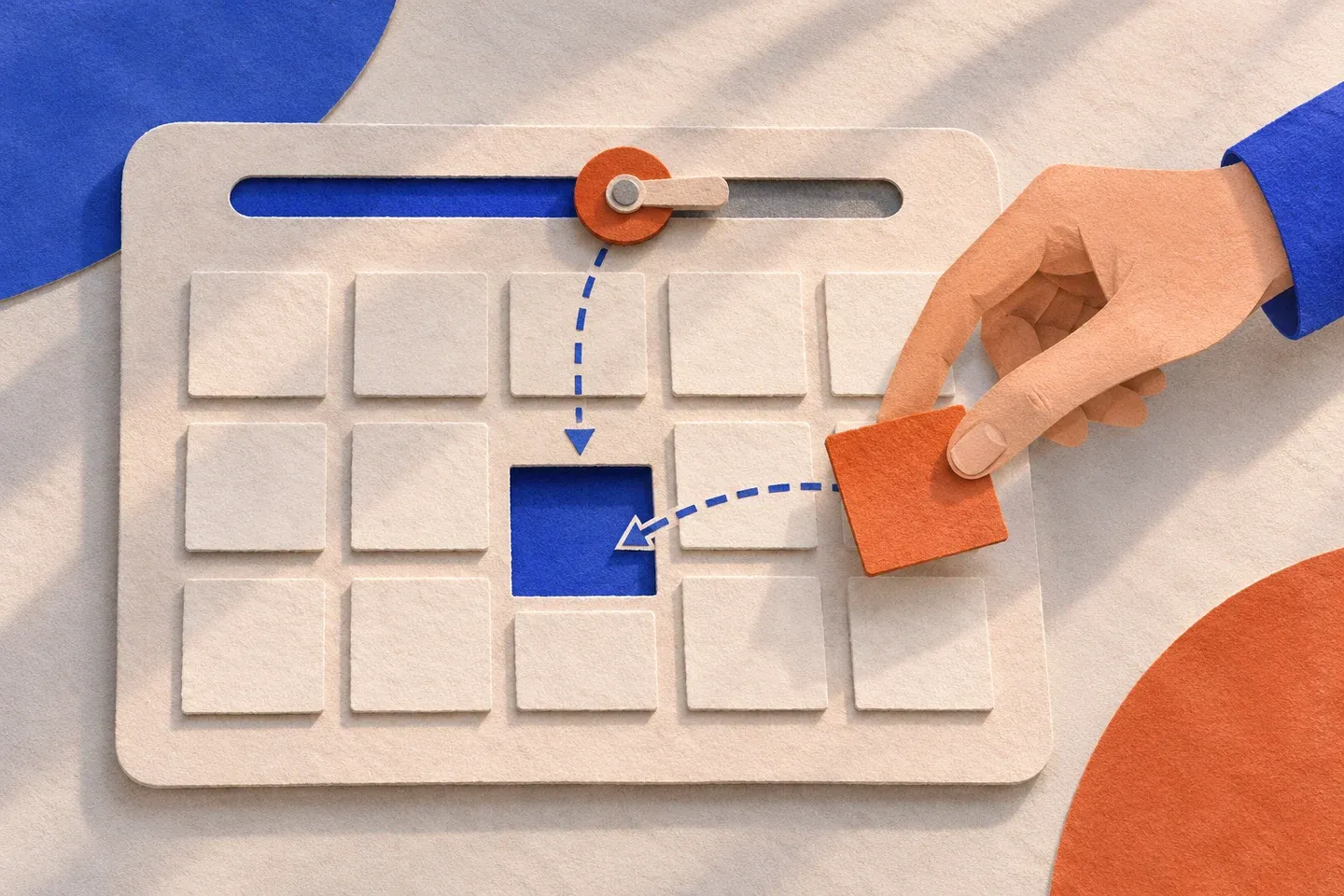
A system open to an audience adds a choice that does not belong entirely to its designer. But that opening has boundaries too. Someone may vote among already-generated forms, change a parameter or introduce new material: these are different possibilities that distribute the power to intervene differently.
Simply saying that the audience participates leaves those differences obscure. I want to know what a person can do, which consequences their gesture produces and whether they can recognise them. A vote that changes no outcome has a different function from a choice that alters later generations, even if the button looks the same.
This page’s example collects no votes and describes no session with people. It only allows observation of the decision levels already present in a minimal example. The two AI-generated illustrations materialise them through a frame, tiles and selection: they are metaphors, not recordings of the algorithm.
Signing a set of possibilities
An author’s responsibility need not coincide with controlling every detail. It may concern building an environment in which certain forms become possible while others are excluded. Added to this is responsibility for how that environment is presented and which outcomes are preserved.
Surprise gains value when we can recognise the frame that made it possible. Looking at the result alongside rules and alternatives does not reduce the space for the unexpected. It simply prevents the unexpected from becoming an excuse broad enough to contain any decision.