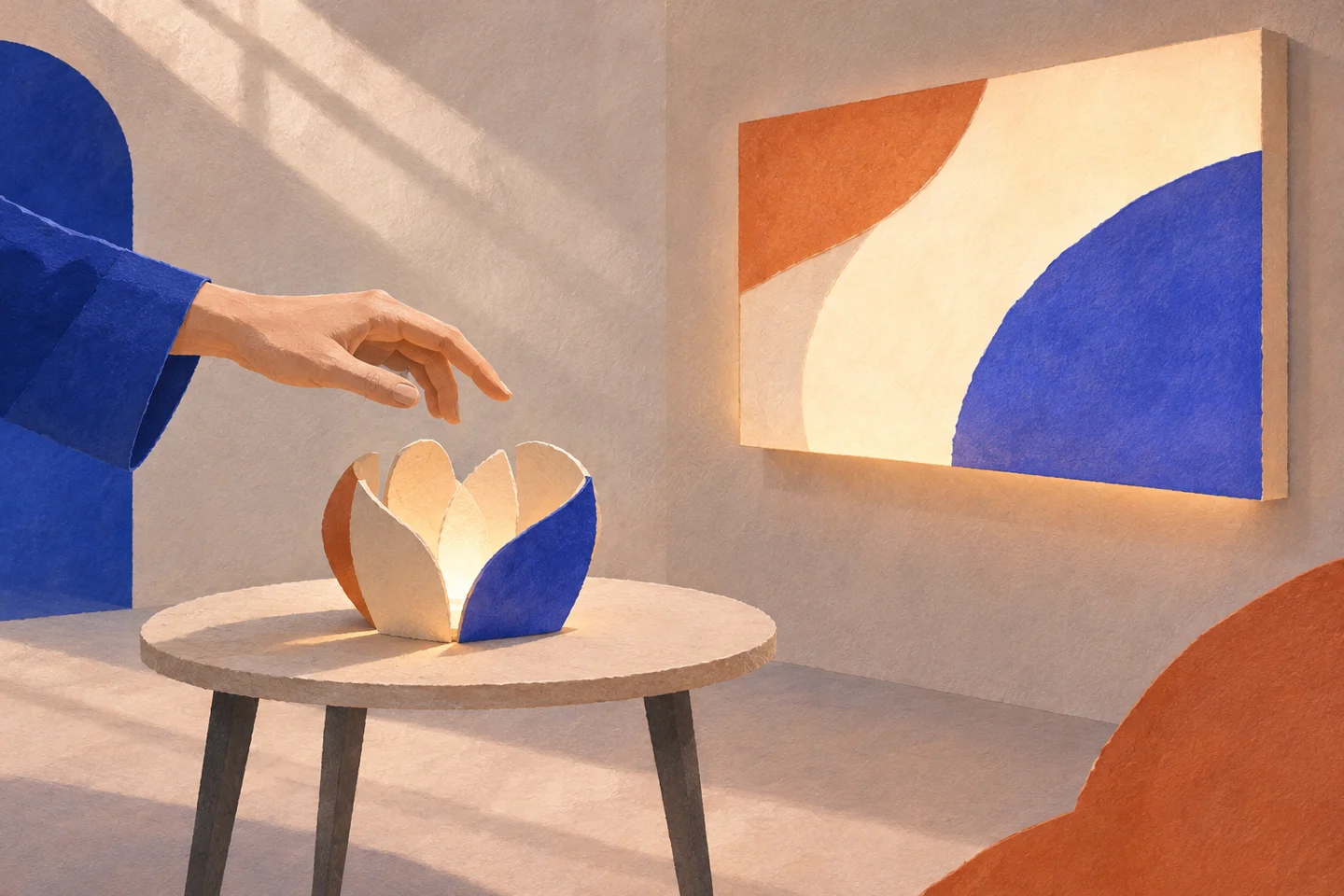
A shape changes on screen and the recording ends. We have seen a result, but may not know what produced it. Does the change depend on a person, a signal or a prepared sequence? A spectacular image can make the work desirable while hiding how it operates.
When I look at documentation of an interactive work, I seek the relationship between what happens in front of it and what it returns. A recording of the isolated response may show its visual quality. Understanding the interaction also requires following the passage that makes it possible.
What the available materials document
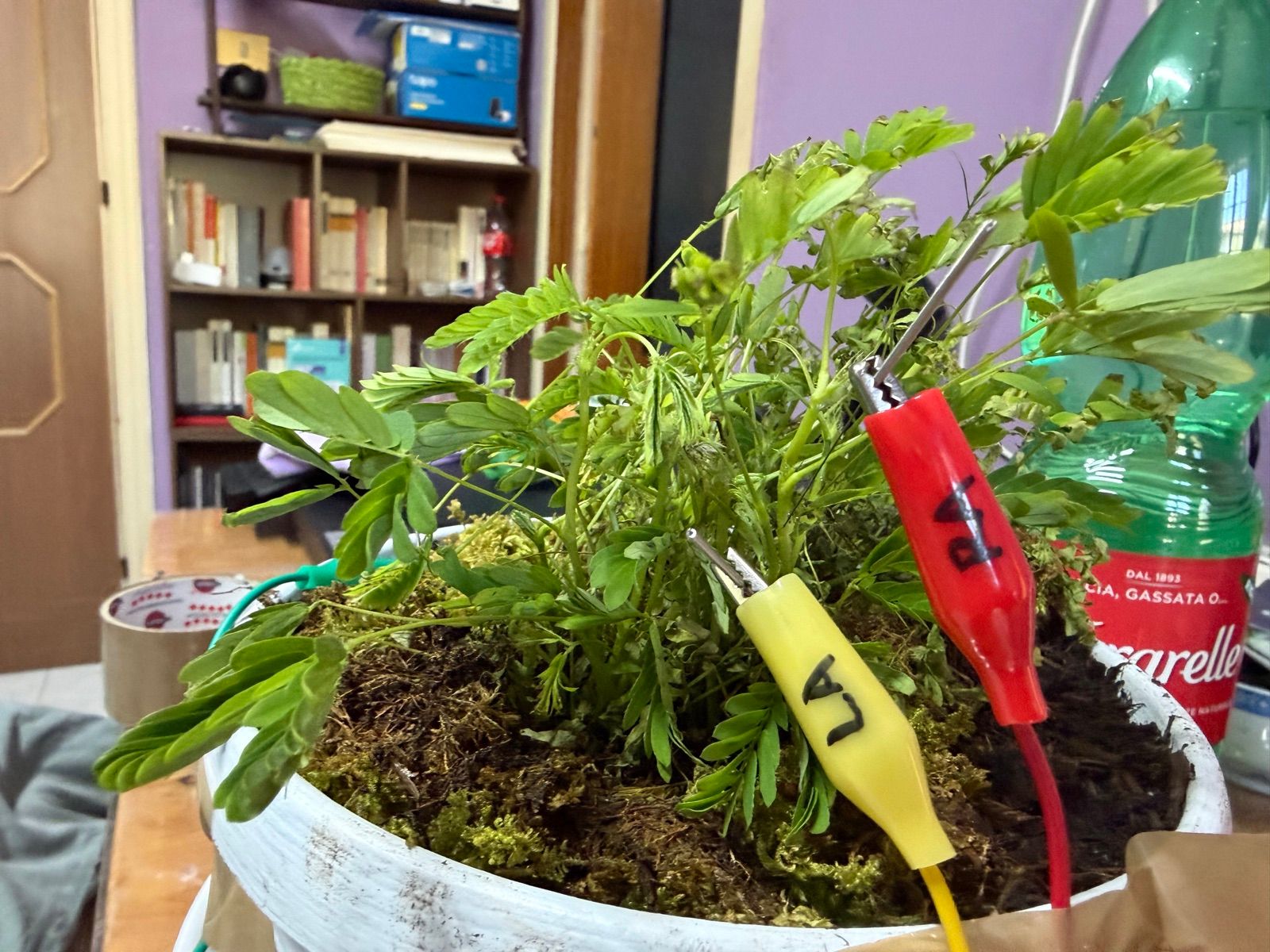
In my project The Blind Gardeners, biosignals from a Mimosa pudica and audience voting enter a generative system. Its repository preserves code and documentation. The photograph referenced here shows the plant connected to electrodes.
That photograph documents a working setup and a material relationship. It does not establish by itself how a particular signal variation changed a form, or how much time passed between a vote and a result. Supporting those claims would require a sequence that makes them verifiable, with the necessary context.
Document and proposed outline
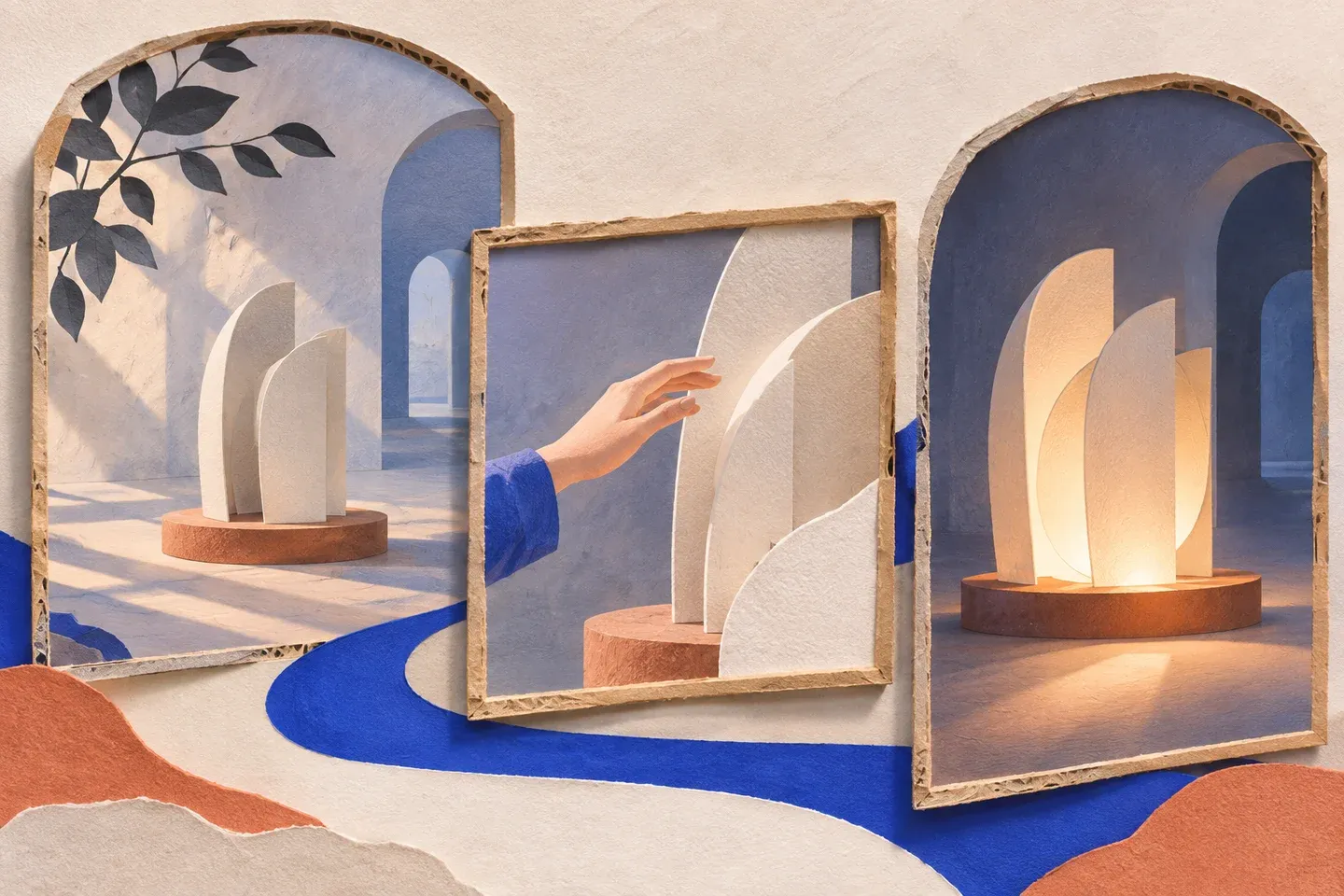
- Situation
- Gesture
- Response
Alongside the existing material I prepared a proposed documentation outline, clearly distinguished from a recording already made. It includes a view of the situation, a detail of the action and a view of the response. The AI-generated illustrations use an imaginary model: they are not substitute photographs of The Blind Gardeners.
A gesture needs its surroundings
A close view of a hand can be clear and still insufficient. It does not show how recognisable the control was before being touched, who could reach it or which other people were intervening. An overall view restores some of these conditions; the detail then follows what would be too small from a distance.
A gesture becomes documentable when we understand what it addresses and under which conditions it happens. I would therefore avoid building the sequence entirely from effective close-ups. A less striking shot may preserve the spatial connection that makes the others readable.
The same caution applies to sound. If the recording contains added music, viewers should be able to distinguish it from the work’s sound. If a demonstration is silent, the absence should not look like silence produced by the device. Presentation choices change the questions we can ask of a document.
Letting the wait remain visible
Editing tends to remove stretches where nothing seems to happen. In an interactive work, however, waiting can be a substantial part of the relationship: the time before understanding where to intervene, the time a response needs, or the time spent deciding not to persist.
A sequence can be shortened to make it easier to consult. But I would preserve the distinction between shown time and actual time, indicating an acceleration or interruption when it matters. A cut that makes a slow response seem immediate changes the work being described.
An unsuccessful attempt can also be informative. It might reveal a hard-to-read control, a condition anticipated by the system or a fault. Documentation should help distinguish them. Treating every hesitation as evidence of failure would be as unfair as erasing all of them to make operation appear inevitable.
Two documents for two questions
A short presentation may seek emotional impact; process documentation should allow more patient examination. I would not ask the same edit to serve both needs well. Instead, I would prepare a short entry point and reference material in which actions, timings and limits remain traceable.
The latter would include the trial’s conditions and what was missing. An absent sensor, simulated data or a demonstration mode does not make a recording useless. They become a problem when editing lets them pass for a different situation.
Documentation should also make clear what has not yet been demonstrated. A beautiful form deserves to be looked at. The relationship that made it emerge deserves a frame generous enough not to disappear behind it.