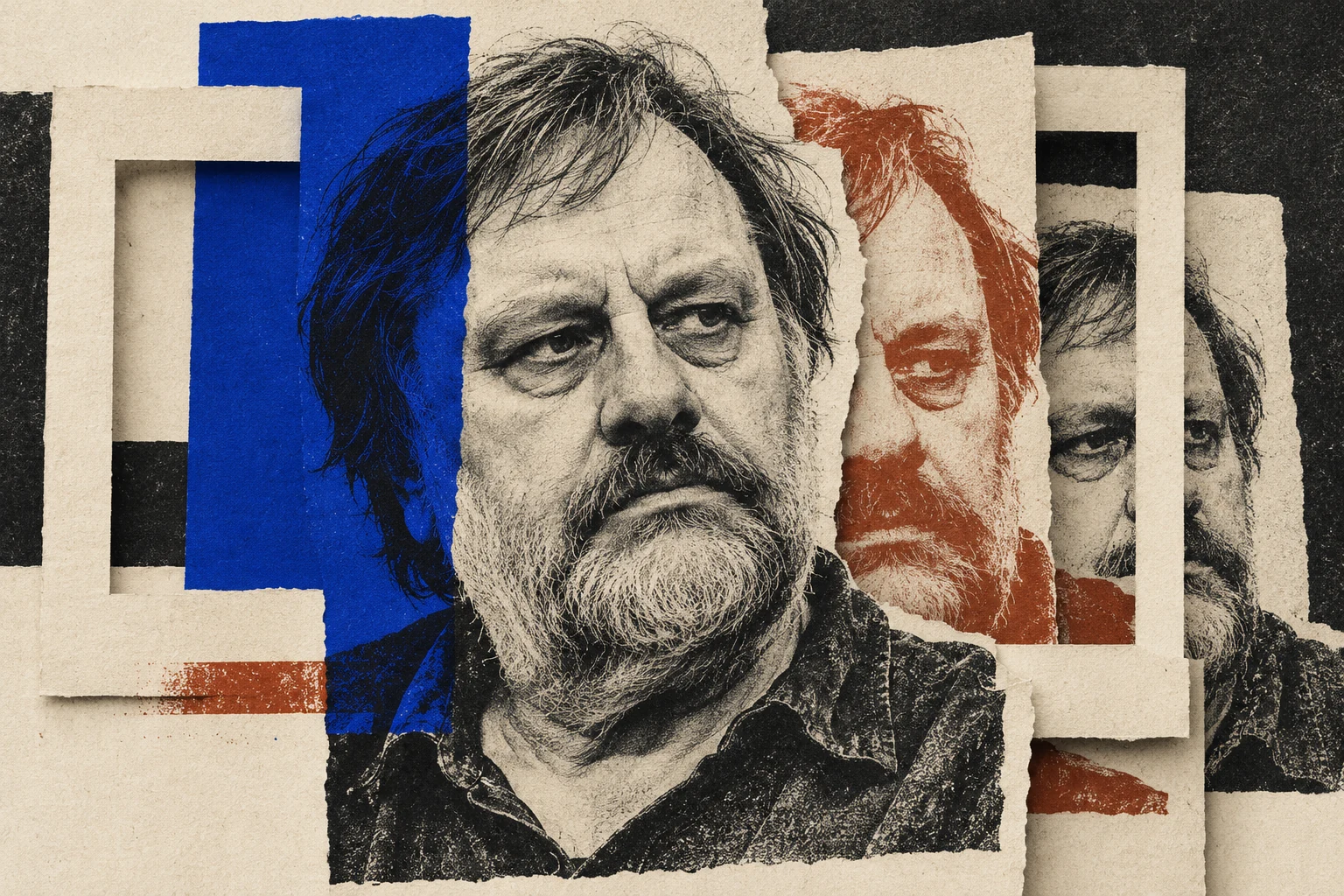
There are thoughts we make room for on condition that they move nothing. We find them intelligent, even necessary; we learn to recognise their author and repeat his jokes. When it is time to return to our lives, we already know where to leave them. Towards the end of Zizek!, Astra Taylor’s 2005 documentary, the suspicion that making a philosopher famous might also be a way of avoiding taking him seriously unsettles this arrangement a little.
That suspicion comes from a man who works diligently at making himself recognisable. Lectures, interviews and domestic conversations form a figure capable of drawing attention even when he declares that he hates it. Clothes kept in kitchen cupboards can stay in the memory as vividly as an argument; a joke about toilets can travel more easily than the critique of ideology it is meant to introduce. In the film, this imbalance concerns the relationship between thought and spectacle, but it also reaches into the way we inhabit what we know.
We can recognise a command and go on obeying it, desire change and hope it will spare our habits. Distance gives us time to understand; sometimes it also provides a comfortable seat from which to watch. In the passages between love and politics, psychoanalysis and consumption, this ambiguity keeps recurring. It also concerns the speaker, exposed to the very mechanisms he knows how to describe.
The person behind the mask
When Žižek declares himself a monster, he rejects the ritual through which the famous intellectual becomes, for a few minutes, a person like us. Usually it takes very little: an innocent pleasure, a weakness, evidence that someone warm survives beneath the role. The images of his apartment seem to offer precisely that access, while its inhabitant’s words make it suspect.
We reserve a loyalty for the person we shelter behind our actions that we would scarcely grant to anyone else. Even after doing harm, we can consider ourselves better than our behaviour. We know the circumstances, the hesitations, everything that might have prevented it; we often know less about whoever suffered the damage. We would like being understood to count, by itself, as a mitigating circumstance. Our inner complexity is real, but it proves particularly useful when we are asked to answer for something.
Rejecting the human mask does not, however, reveal the definitive truth about Žižek. The monster, too, is a memorable figure. Before a camera, one can perform one’s impatience with performance, and the audience can grow fond of precisely that. The search for an authentic intimacy then risks postponing judgement on actions once again, while we wait to discover who is really behind them.
Yet that hidden person does not act alone. Languages and behaviours are already available for that person to recognise themselves in. To understand what its claimed distance is worth, we need to follow that person beyond the apartment, into the things they use without thinking.
Ideology in the things we do
Toilets are a good place to lose one’s solemnity. In the comparison between French, German and Anglo-American fixtures, the joke assigns the objects’ different forms different relationships to what the body expels. It would be naive to derive a science of national character from it. The example remains vulnerable to stereotyping; its strength lies in confronting us with an object we had thought merely functional and making that confidence questionable.
A practical form also determines what to leave visible, what to remove, which gesture to make habitual. Decisions can become so familiar that they disappear into use. Eventually, it is enough to do what is expected, without subscribing to a doctrine or feeling particularly convinced. Ideology finds room in this economy of attention as well.
Irony can coexist perfectly well with a habit. We know a ritual is empty, a promise unlikely, a language conventional; meanwhile, we go on using them. Awareness even offers a small reward: at least we are not taken in. Lucidity can become the compensation we give ourselves for our obedience. Changing would mean losing that privilege too, the pleasure of feeling different from those who perform the same gestures without commenting on them.
In the film, distrust of overly direct declarations reaches even “I love you”. We can say it as a quotation, attach a reservation, show that we recognise the naivety of the words we are using. We protect ourselves from what a sentence might commit us to upholding. The need to keep our distance reveals how much those words still matter to us: if they were truly harmless, we would not take such care to defuse them.
When pleasure becomes a task
Freedom, too, can arrive with unspoken instructions. The authoritarian father orders the child to visit his grandmother; the tolerant one reminds him how much she loves him and leaves him the choice. Refusing would mean disappointing her. The second command therefore asks for more than obedience: the child ought to want the visit, to recognise in the order an impulse of his own affection.
It is possible to preserve a space for dissent while following an explicit order. Doing so becomes harder when one must also feel the right way. Solicitude enters the conscience and leaves a debt there. Even before saying no, we find ourselves reckoning with our ingratitude.
The account of breakfast at McDonald’s also complicates the division between the person giving orders and the person obeying. The father takes his son there to make him happy; the son, in the father’s reading, seems happy so as not to disappoint him. We do not know what the child feels. We can, however, recognise the possibility of a satisfaction sustained by mutual expectations, which each helps to maintain out of consideration for the other. Admitting one’s own desire might offend someone who was doing us a favour.
The injunction to enjoy insinuates itself into this difficulty. In the Lacanian vocabulary taken up by the film, the superego can demand satisfaction while making it painful. A holiday can become an exhausting comparison between the joy we expected and what we manage to feel. If everything was available, something must have gone wrong in us. Free time ends up having a yield for which we feel responsible.
The obligation to feel good also requires prudence: avoiding excesses that might compromise the promised wellbeing. Permission to enjoy thus fills up with precautions again.
Desire that begins again
On the television in the film, a succession of products promises to preserve pleasure after removing the property we fear: coffee without caffeine, beer without alcohol. Then comes a war without casualties. A parenthesis specifies that this means casualties on our side. The sequence moves from the desirable harmlessness of a product to a very different political demand: keeping an experience sheltered from consequences that will continue to fall elsewhere.
That parenthesis divides the world. For those receiving the promise, war can appear purified without having lost any of its violence. What matters is who is included in the calculation. The desire for an experience without drawbacks may conceal a willingness not to look at where those drawbacks have gone.
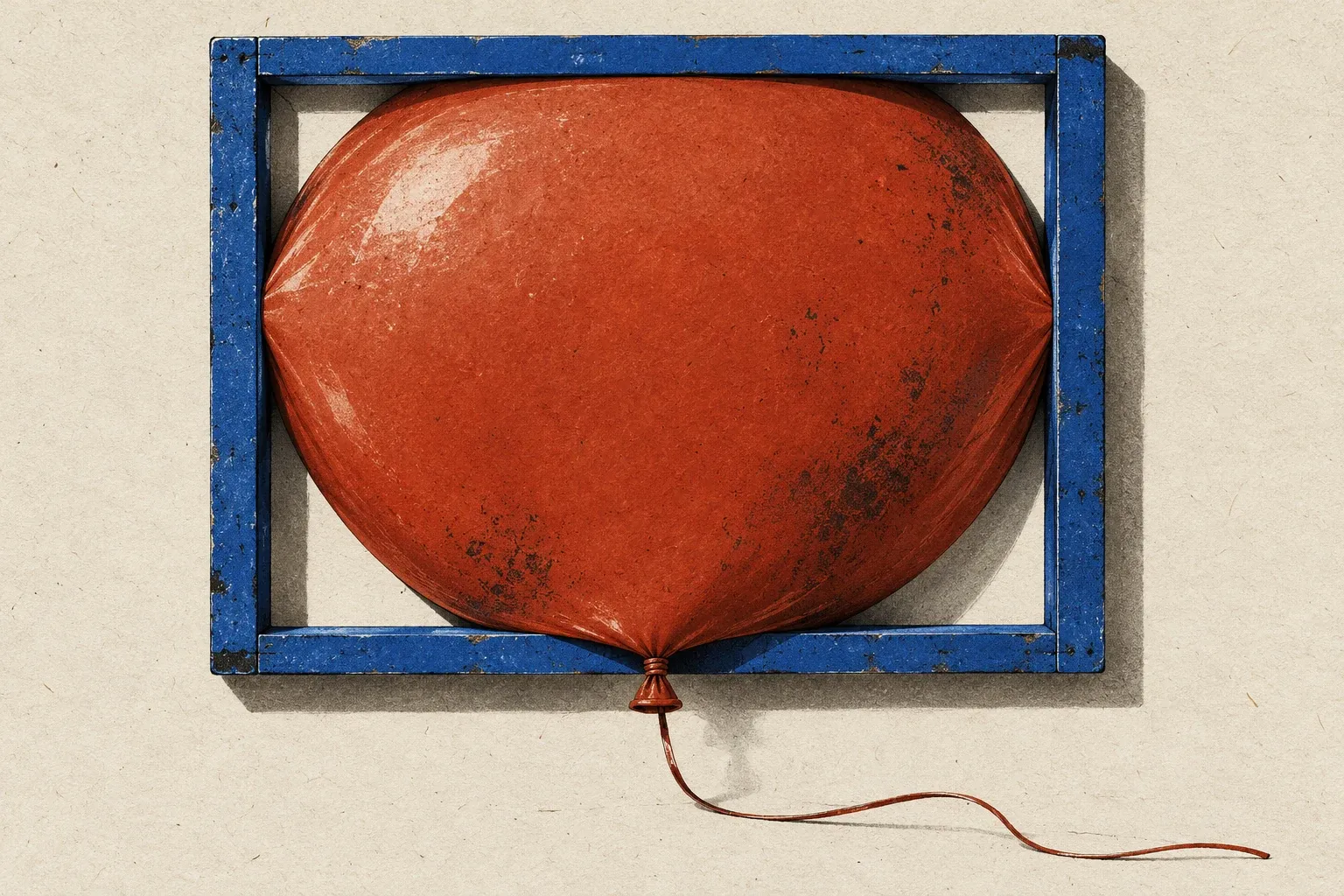
The bottles return and multiply. Drinking is followed by the desire to drink again and the next purchase. Dissatisfaction allows the promise to continue: if a bottle fulfilled it once and for all, it would also interrupt the anticipation of the next one. In some desires, what binds us to the object is the possibility of beginning again, as well as what we get from it.
Here the relationship between Marx and Lacan takes on substance. The surplus enjoyment evoked in the intertitles names an excess belonging to the movement of satisfaction itself; it is not a supplementary dose added to a pleasure that would otherwise be complete. The comparison with surplus value and the expansion of capital suggests an affinity between movements that find a reason to continue in their own renewal. In the diet, caffeine-free drink, the object seems almost to withdraw, while the offer to buy it remains intact.
This reading does not exhaust our desires. It does, however, reveal how impoverished the image of an individual merely satisfying already given needs can be. Anticipation occupies us, gives us something to want. For those selling it, satiety would be an inconvenience; for those buying it, it could become a loss.

A normality to question
When pleasure fails to arrive, the bill is often presented to the individual. They ought to know how to relax, how to desire better, how to take advantage of their opportunities. The account of their failure leaves the criterion used to judge them intact. In the passage on psychoanalysis and culture, the film questions precisely this allocation of responsibility.
The individual takes shape in relationships with others and with a social order that precedes them. Even what we consider normal entails renunciations and permitted ways of desiring. Discomfort cannot therefore be confined, without examination, to the abnormalities of those who fail to adapt. It may also concern the form of life they are expected to conform to. The film’s stated ambition is to read personal conflicts, permissive societies and fundamentalist forms of racism together. Psychoanalysis thus enters social criticism, beyond the task of bringing the individual back to normality.
Discomfort alone does not prove an order unjust, just as the ability to adapt is not enough to make it good. A space for judgement opens here which the encounter between Marx and Lacan seeks to preserve: how much do we attribute to the individual, and how much do we make inevitable by calling it normality?
Žižek’s confessed fear that everything might collapse if he stops talking also remains within these relationships. In the film, his hyperactivity is both work and a presence demanded by those around him. Turning that confession into a diagnosis would close off too quickly the question of the audience wanting to hear more and the image he himself helps create. One can exhaust oneself continuing to occupy the place others recognise as one’s own.
What we ask of a philosopher
Once even the criteria of judgement become questionable, seeking an answer means examining the question we arrived with. In the film, philosophy works on this shift. Before deciding whether we are free, it tries to understand what we are calling freedom, which possibilities we have already ruled out by naming it. A problem can change shape when its premises become visible.
From there to refusing every concrete answer, however, is a short step. A physical threat requires appropriate means of dealing with it; the film invokes examples of catastrophes to acknowledge science’s necessary work. Discussing a question’s meaning must help us judge the situation, otherwise it becomes a cultured way of postponing it. Whoever claims the right to correct other people’s questions also takes on the responsibility of showing why they are inadequate.
The expectations directed at the lecturer make this responsibility personal. Some want a political formula, others support, others an evening of intelligent entertainment. Adopting the analyst’s position, as Žižek proposes, means putting those expectations to work, even frustrating them. Asking why we await a solution from this man may be more uncomfortable than receiving another formula. But refusing to supply one is not, in itself, proof of depth.
The demand for clarity applies to his own way of thinking too. Watching Lacan on television, interest in his propositions coexists with explicit irritation at his performance and emphasis. Obscurity can seduce, but an argument should be able to survive the voice presenting it. Studying an author does not oblige us to imitate his gestures.
When, later, his allegiance to Lacan is challenged, Žižek declares it openly and rejects the idea that a conspicuous distance is already a guarantee of freedom. The criterion ought to be whether reasons can be discussed, including those of one’s own author. The same demand applies to him: how much of our interest remains when the pleasure of recognising the speaker disappears?
The cost of provocation
A thought can also be welcomed as a way of neutralising it. A political statement delivered in the expected form immediately finds its place and ceases to disturb. On this possibility Žižek bases his defence of his excesses, the portrait of Stalin and the formulations associating the left with fascism. He claims discipline and collective action for the left, refusing to consider them the property of the regimes that made use of them.
In the documentary, the relationship with politics also passes through memories of dissidence and images of the electoral campaign. The man who would prefer anonymous theoretical work has spoken in a concrete contest. When he confesses that his heart is not in the political speeches his audience expects, that confession does not cancel what his words produce.
The intention to disturb does not determine the effects of the disturbance. A provocation can make a distinction visible; it can also reduce a history of violence to expressive material for someone wanting to appear uncompromising. Sarcasm offers no advance absolution, and taking it all literally can prevent us from judging the argument. We need to follow what happens to the distinction after the scandal, when discussing it should become possible.
The black humour of the final sequences, with its fantasy of a bureaucracy charged with authorising suicide, also troubles anyone seeking a comfortable position between complicity and condemnation. The joke takes the administration of life to a grotesque extreme. The question remains how much room it grants those who suffer and how much it reserves for the intelligence of the person telling it.
Meanwhile, the audience can learn to expect excess. The most aggressive line becomes a fixture, the refusal of respectability a recognisable signature. The disturbance is applauded, and the evening proceeds as planned. Fame knows how to absorb even attempts to escape it.

Loving, choosing, imagining a way out
We can applaud a rupture and go on fearing what it would ask us to give up. The discussion of love, placed at the beginning of the film, makes the cost of a preference tangible before the political examples arrive. A fragile person, a detail of the universe, acquires disproportionate importance. References to physics belong to Žižek’s philosophical construction: the image of a cosmic imbalance serves to think through preference, not to demonstrate it scientifically.
Universal love has room for a generosity that no one in particular will come to test. Loving someone, by contrast, exposes us to the possibility of disappointing them. Their life continues beyond our intentions and asks for space, time and sacrifices. The language of violence used in the film insists on the breaking of an equilibrium; using it to justify harm inflicted on a person would erase the very responsibility of choosing.
Choosing takes away the possibility of declaring ourselves available for everything. Something is excluded, something else begins to concern us without being retractable whenever it becomes inconvenient. It is a loss our ideal of freedom struggles to admit: we would like to keep possibilities intact even after choosing one.
The discussion of utopia transfers this difficulty into history. In the 2005 film, the ease of imagining a planetary catastrophe is set against the difficulty of conceiving a change in the economic order. We grant destruction possibilities we deny to change. Utopia then arises from the urgency of inventing a way out when the permitted alternatives are no longer enough.
Recognising that urgency opens up political work. We need to discuss how to live differently, by what means and at whose expense. We often demand guarantees from alternatives that we have stopped asking of the present order; on the other hand, the need for change does not absolve in advance the world we would like to build. Fear of making a mistake can disguise itself as wisdom, enthusiasm can exempt itself from judgement. In either case, the price risks being paid by someone we have not listened to.
A film that implicates us in the portrait
The stage and the apartment, the interview and time spent with his son offer different opportunities to compose an image of Žižek. Taylor and editor Laura Hanna bring these situations together without removing the camera’s presence from them. Intimacy remains part of the portrait; even the refusal to be portrayed finds a place in it.
The visit to the film shop complicates the portrait further. His declared enthusiasms cross political allegiances that would seem incompatible; taste follows connections an orderly biography struggles to contain. Cinema offers him examples for thinking and remains something he wants to watch and own. We can listen to those judgements without seeking a coded political declaration in them, but also without assuming that aesthetic pleasure makes the chosen works irrelevant.
Parallax, discussed towards the end, prevents us from closing off this plurality too easily. A change of position alters what appears; in Žižek’s philosophical argument, the gap between perspectives cannot simply be resolved into a more complete view. The example of the experience of thinking and the brain observed from outside raises the difficulty of reconciling those two kinds of access. The scientific explanation, which he acknowledges, does not, for him, eliminate that gap.
We too can apply this attention to the portrait, without making it a summary of his theory. The father, the lecturer and the reader of Lacan appear in different relationships, from which contradictions emerge that no private confession will resolve. Naming a mechanism does not mean being able to control it. The man who wants to be read for his arguments continues to offer his audience other material by which to remember him.
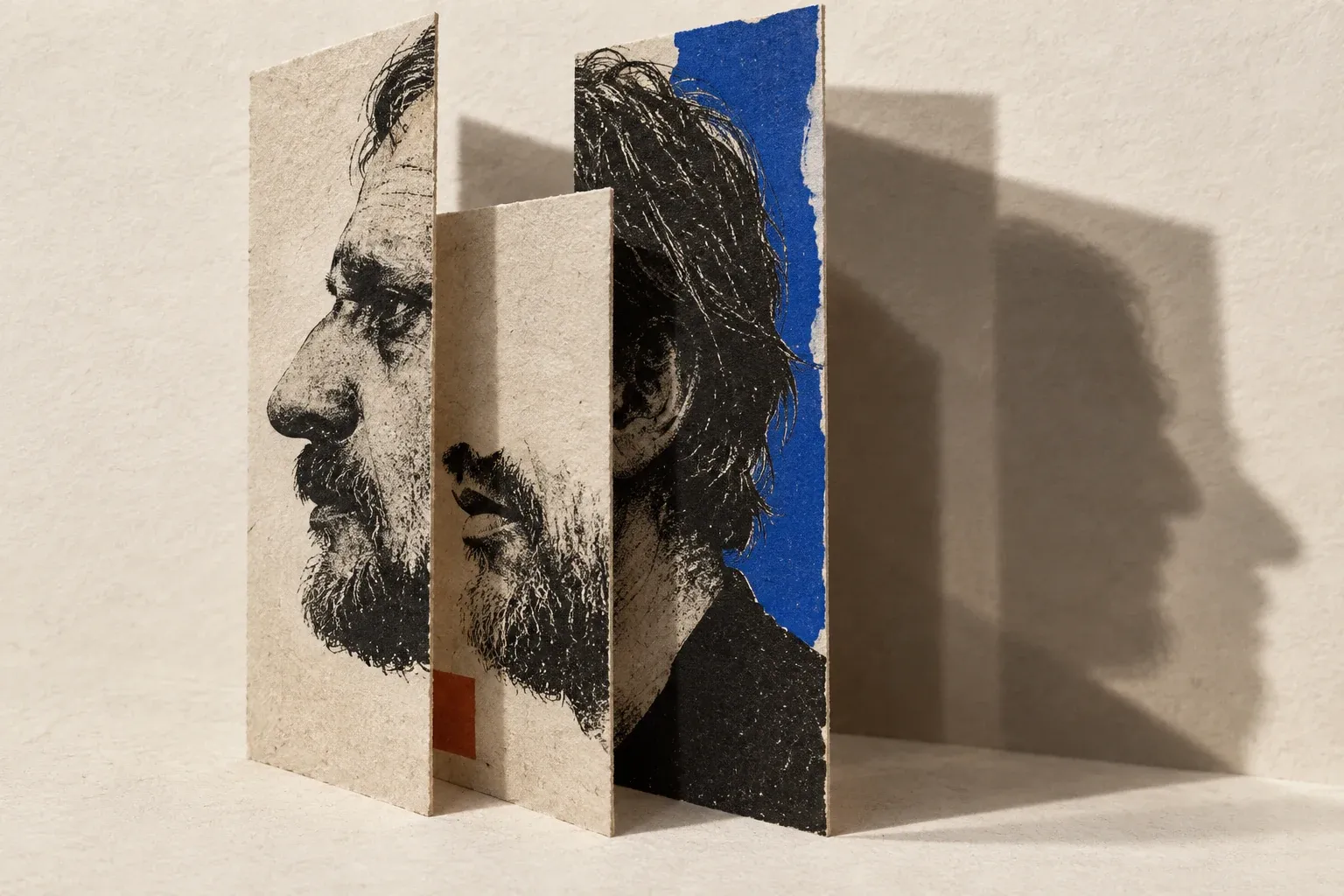
Even the ritual of writing involves a small deception: collecting already developed notes, calling the subsequent work revision, thus escaping the weight of beginning a book. The most serious activity coexists with the expedients needed to sustain it. Thought takes shape in these conditions too, and the figure of the philosopher ends up making them visible alongside his ambitions.
Distance therefore retains a necessity. Without being able to step away from a role or habit, we would also lack the means to judge them. But we can use that margin to understand them better or to declare ourselves separate from them while they continue to sustain us. After the film, familiarity with Žižek may leave us satisfied at having recognised all this. It would be an outcome very close to the one he fears: an audience willing to grant thought every freedom, provided its own life can continue undisturbed.
Zizek! (2005), directed by Astra Taylor, edited by Laura Hanna. The film on UbuWeb, Zeitgeist Films’ page and the distributor’s press kit.