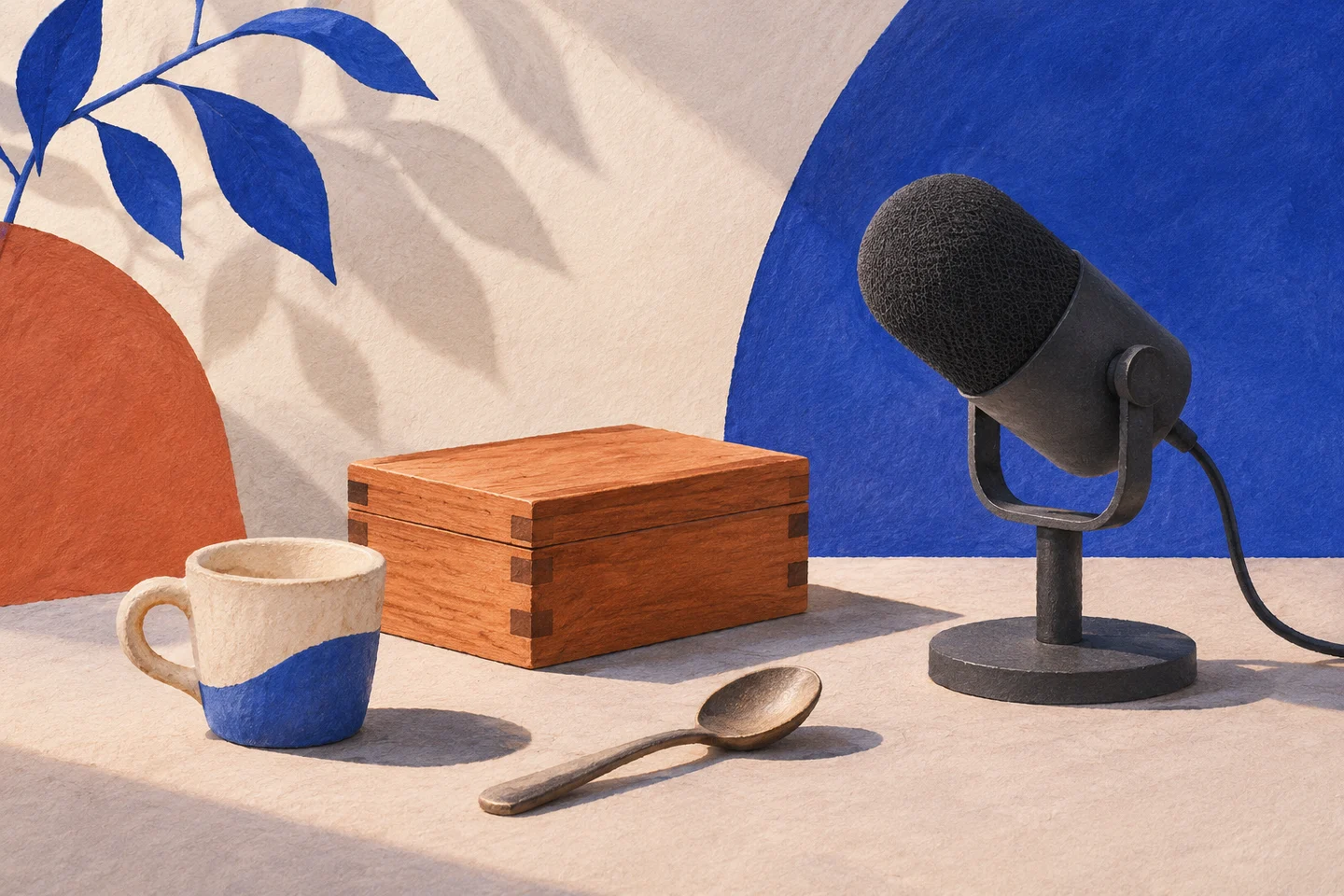
The spoon enters the frame and we already expect something. Before hearing it, the visible material prepares a family of possible sounds. A dry impact and a long resonance would make the same gesture read differently. Work on sound begins with this expectation, rather than only in front of a microphone.
In Foley, the objects used to construct an effect may differ from those we see. ACMI’s introductory material describes the practice through ordinary objects and synchronisation with on-screen action. Here I start with a more limited sound comparison built specifically for the page.
Separating the impact from its tail
I prepared two synthesised sounds. Both start with a short impulse; one dies away quickly, while the other leaves a longer, higher resonance. Each lasts two seconds, including the final silence. They are original digital models: no cup, box or utensil was recorded for this example.
Two resonances to hear
Original synthesised audio, without speech.
This choice isolates a problem before looking for a physical object. What makes me expect a hard surface? How much comes from the sound’s beginning, and how much from its continuation? Listening may suggest associations, but it does not identify a material with certainty. Frequencies and decay change together; the comparison does not measure each parameter’s separate contribution.
An effect’s credibility depends on its relationship with the gesture we assign it to. A sound that convinces on its own may feel wrong under a light touch; a sound with little detail may work if it meets the timing and weight suggested by the image.
Relationship before resemblance
The illustrations show different objects and cavities. They are AI-generated constructions that help imagine a search for material, rather than documentation of a recording session. The distinction matters: a picture of a microphone facing a cup does not establish that the audio came from that cup.
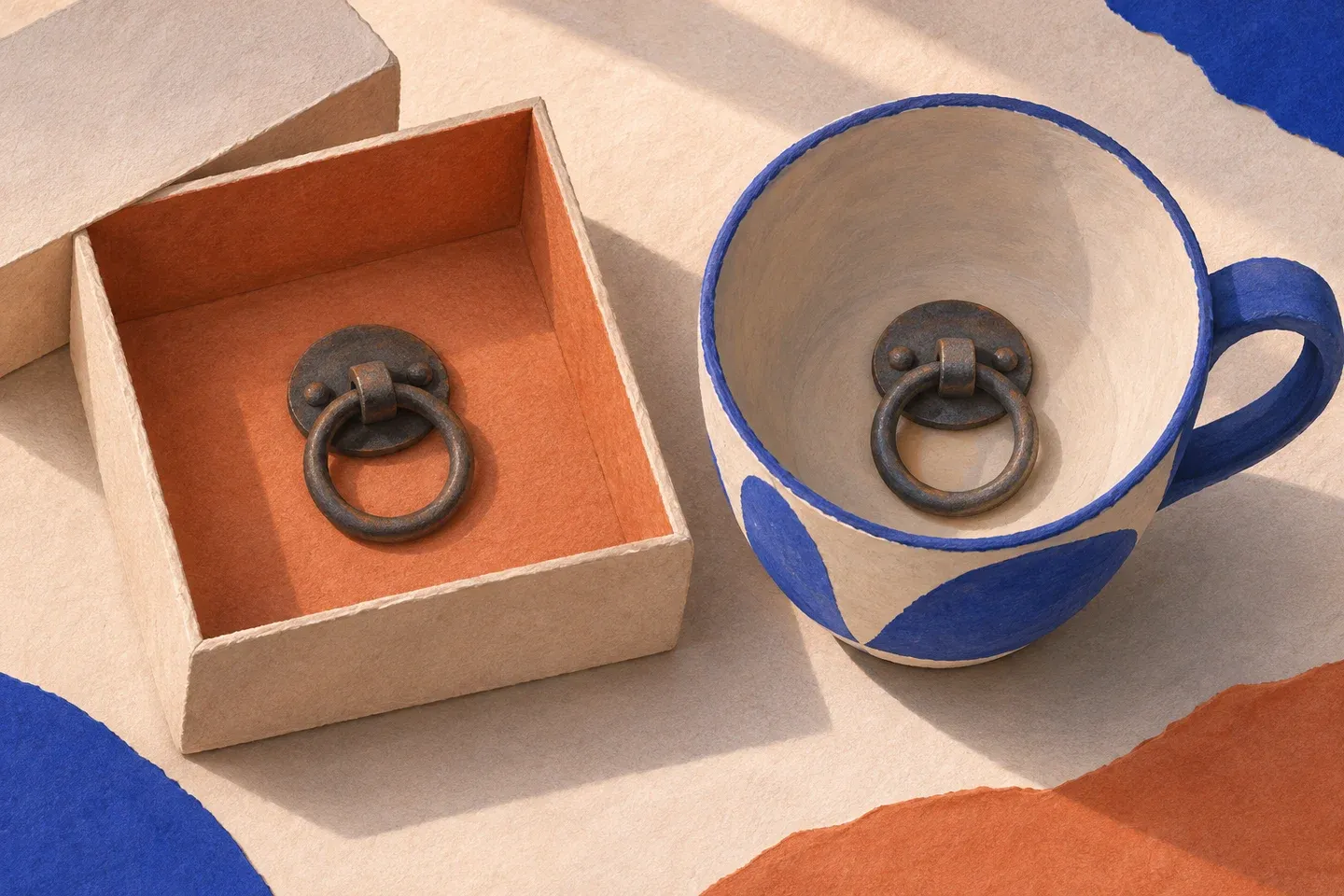
In a trial with real objects, I would record the visible gesture separately from the material that might support it. A small inventory would preserve each attempt’s origin: the object, how it was struck, microphone position and later transformations. The surprise of a successful pairing does not justify losing the memory of how it came about.
Visual similarity between source and scene may even get in the way. Looking only for an object identical to the one filmed limits the search, whereas the sound may need another cavity, another surface or a more controllable gesture. The comparison has to return to the scene each time, where the effect must find a reason to belong.
The moment when it happens
A sound placed before contact may seem like a cue announcing the action. Moved after it, it may appear as a slow consequence or a separate event. The audience need not describe this offset technically for the relationship to change. Discussing synchronisation therefore requires a timing reference and a preserved sequence, rather than the audio file alone.
This page offers separate listening examples without claiming a filmed synchronisation. It is a workshop’s first stage: choosing sonic characteristics to try later against footage. This limit prevents the example from being credited with a result it does not contain.
Keeping the attempt as well
When an effect works, the scene tends to make us forget the object that produced it. Working documentation benefits from the reverse journey: finding the source again, distinguishing recorded sound from transformations and being able to repeat the comparison.
The object offers possibilities; editing decides which of them becomes an event. The two synthesised examples remain deliberately exposed, without a scene making them inevitable. They let us hear the choice before the story hides it.