The key is on the table. A cut, and a door appears, standing ajar. The key might open it; perhaps someone is about to leave. Yet no hand has entered the image, no one has turned the lock. Between these two things, we have already begun to construct an action we have not seen.
If the door comes first and the key afterwards, the detail on the table can carry a different weight. It might be something someone has left behind. Or it belongs to an entirely different door. The images allow these readings without settling them: the relationship we try to give them is part of the story.
Three things, six seconds
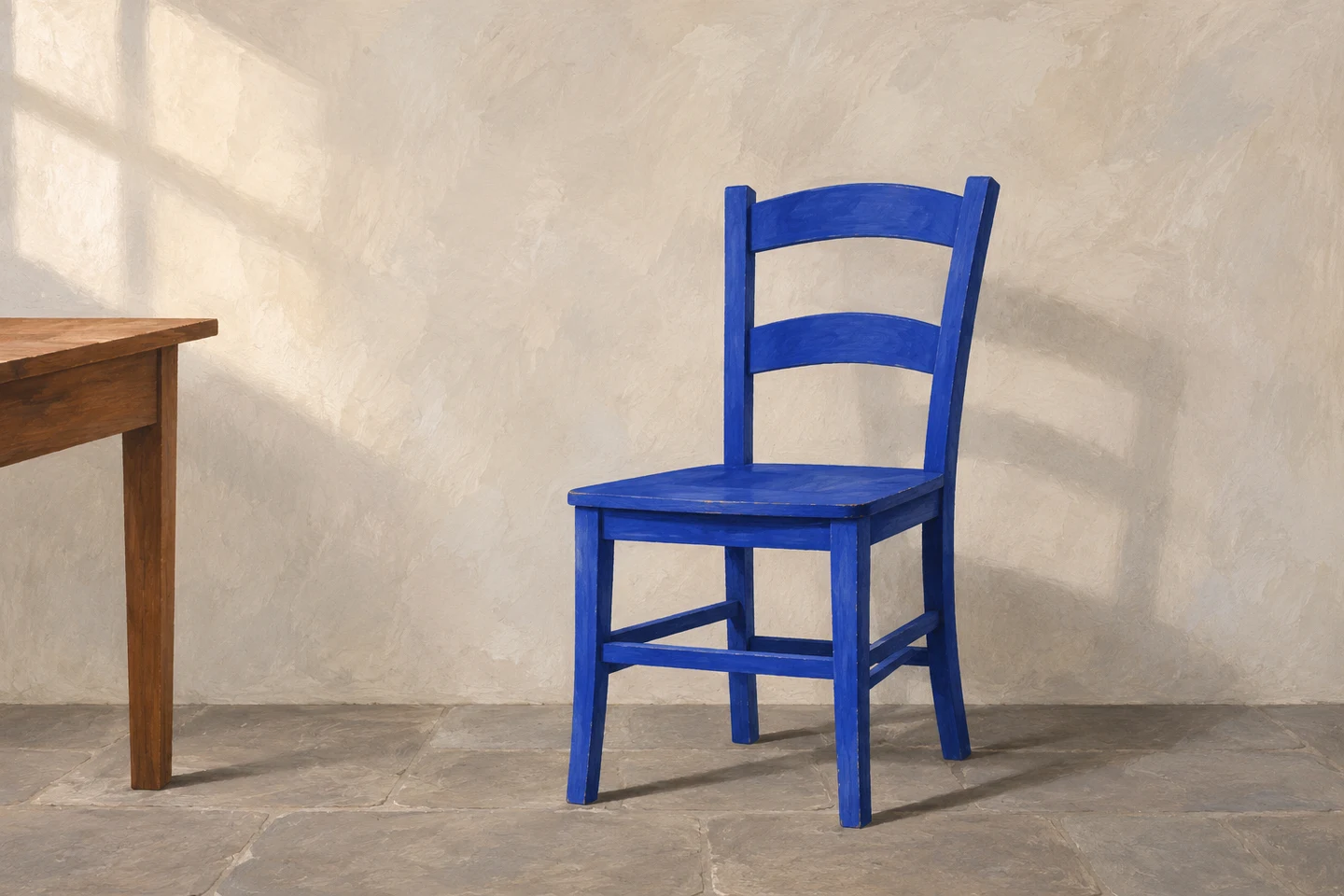
For this workshop I have prepared three images: an empty chair, a key on the table, a door standing ajar. They are AI-generated illustrations, composed as three views of an imaginary interior. The comparison edits them as still images: two seconds each, six seconds in total. They are not recordings of a room or of an action that took place.
The chair opens both sequences. In the first, the key and the door follow; in the second, the door and the key. The same three clips are reused, with the same duration and the same hard cuts. I have added no music, camera movements or dissolves that might suggest an emotion or a distance in time.
Watch, then swap two images
Three AI-generated illustrations, two edits of still images. The same two-second clips, the same cuts, no audio track. The letters identify only the objects.
Sequence A · B · C ready. Start the video using its playback control.
Sequence A · B · C
Six seconds, no audio. AI-generated still images, not real footage.
Read sequence A · B · C
- A · An empty blue chair beside the edge of a table. From 0 to 2 seconds.
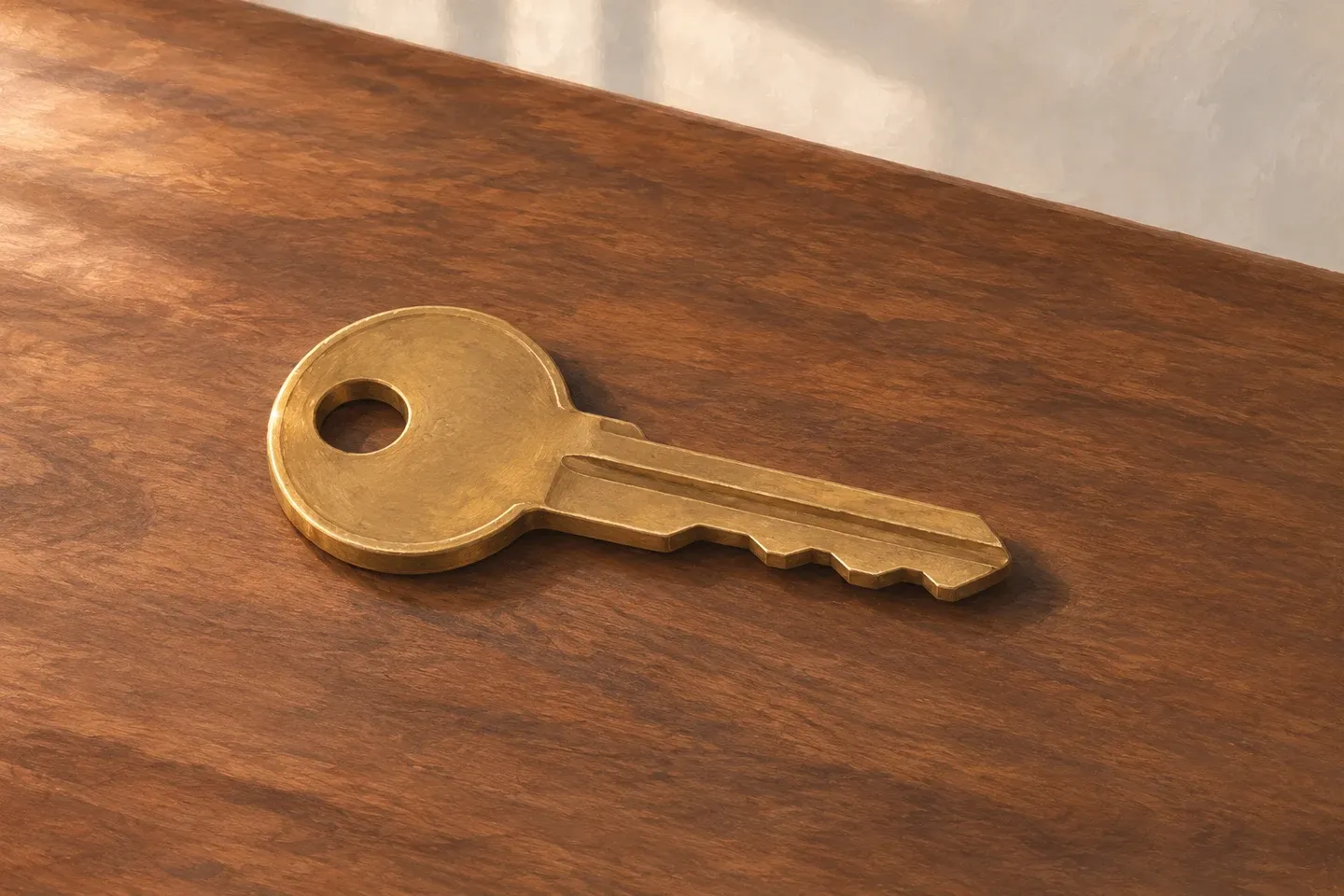
- B · A brass key resting on a wooden surface. From 2 to 4 seconds.
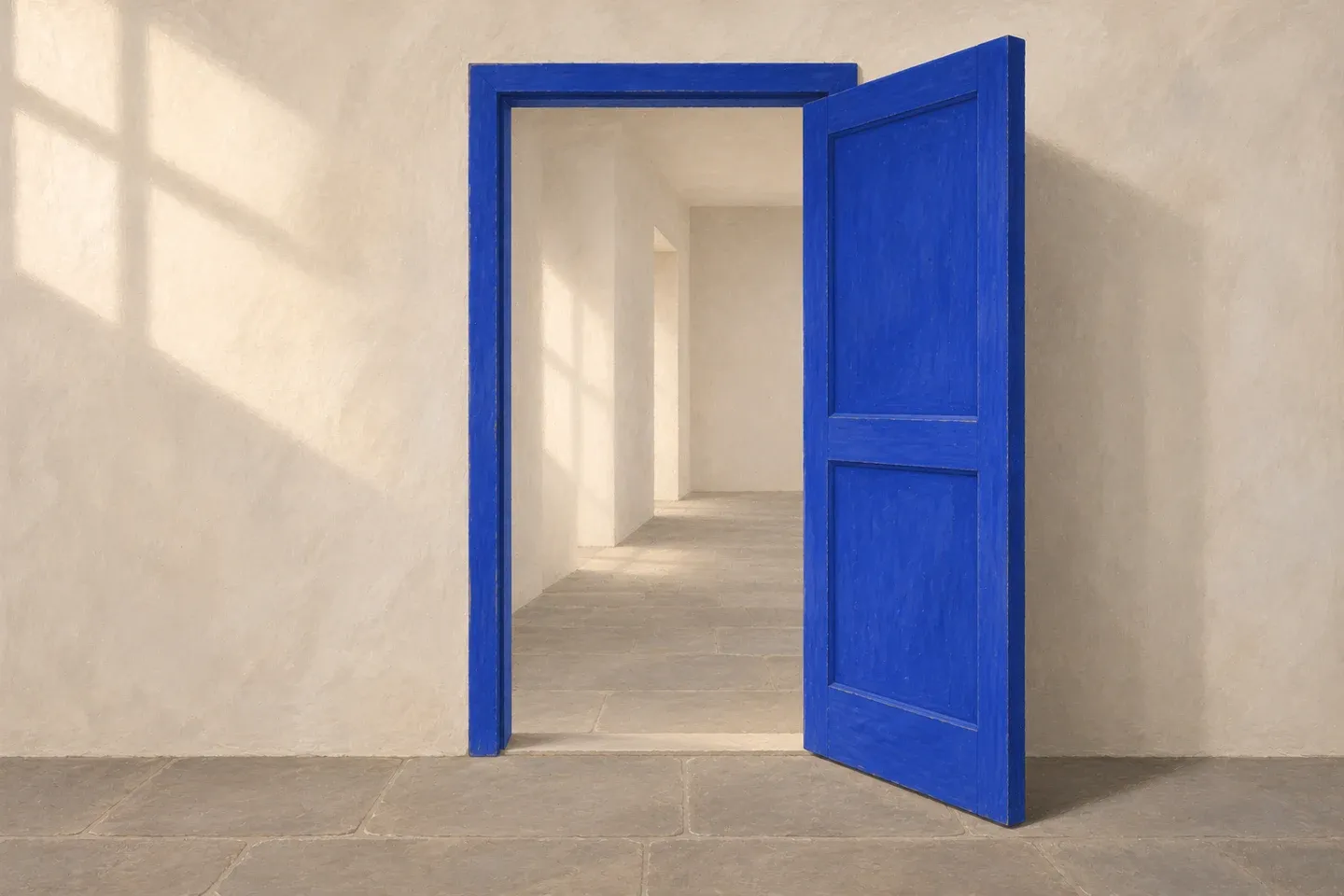
- C · A blue door standing ajar onto an empty threshold and corridor. From 4 to 6 seconds.
Sequence A · C · B
Six seconds, no audio. AI-generated still images, not real footage.
Read sequence A · C · B
- A · An empty blue chair beside the edge of a table. From 0 to 2 seconds.
- C · A blue door standing ajar onto an empty threshold and corridor. From 2 to 4 seconds.
- B · A brass key resting on a wooden surface. From 4 to 6 seconds.
It helps to watch one version all the way through, then the other, before looking for a settled story. The controls show only the order of the letters: A is the chair, B the key, C the door. Choosing a sequence returns it to the beginning and leaves it paused; playback starts from the video control. Below the player, a description of the three images remains in their order.
The third idea in the title can also be a question. Who is missing from the chair? What is that key for? The last image tends to gather an expectation built by the preceding ones, but the answer is not already written into the three objects. This comparison puts us in front of the work of making connections, rather than a solution to guess.
The key first
In the chair–key–door order, the move from detail to threshold can suggest preparation: there is an object that lets someone do something, then a space to move towards. The door can appear as a possibility opened by the preceding detail. To read it that way, though, we have to add at least a person and an action.
Reversing the last two images leaves the key after the threshold. It can become a trace: what remains in the room while the story moves elsewhere. This is one possible reading, not a property of the second version. We can also imagine a return, or notice that there is not enough material to choose.
A cut can suggest a connection that neither image shows on its own. That connection may concern time, a cause, a person who never appears. The work begins precisely when two fragments ask to be read together.
The missing gesture
Taken on its own, the key remains an object resting on a surface. We do not know who owns it, whether it has just been put down or has been there for days. The door standing ajar does not demonstrate its use. Even the resemblance of the light and materials, arranged to bring the illustrations together, does not prove that the three viewpoints belong to the same space.
Here, continuity is a proposal made by the edit. We can accept it and build a small story, or stop to ask what supports it. Keeping this distance is useful even when the images are real footage: the fact that two fragments were recorded does not make every relationship constructed between them true.
In Through Theater to Cinema, collected in Film Form, Sergei Eisenstein describes how a fragment, once joined to another, can acquire a meaning different from the one intended during filming. His example of re-editing Danton is drastic: a gesture towards the face is reread through what precedes it, changing its significance. The re-edit he describes includes cuts and intertitles, not simply the exchange of two positions in our comparison. What matters here is the possibility of assigning a new relationship to existing material.
Our key does not have that history. It makes a smaller distinction visible: the content of the image and the action we imagine between one image and the next. Editing can make that passage seem so natural that it becomes difficult to notice.
An order is not yet a measurement
It would be convenient to call all this the “Kuleshov effect” and consider the question settled. The phrase, however, risks becoming a shortcut: we change a juxtaposition and assume we know what the viewer will feel. The three illustrations on this page do not justify such a prediction.
The abstract on the record for Daniel Barratt and colleagues’ 2016 study describes a comparison of faces and contexts, with participants, ratings and eye-movement recording. This is empirical work of a different kind from this demonstration. Here I collect no responses and measure no emotions: I can control which fragments appear, for how long and in what order.
A plausible reading does not demonstrate the same response in everyone. If one version suggests a departure to us, that reading can guide an editing choice. Claiming that it produces the same effect in an audience requires testing the claim as well as the video.
Leaving the threshold open
Here, six seconds is a working choice, identical in both versions. Holding on the key for longer would change another variable: it would give it more time in the sequence, perhaps more weight in the reading. Adding footsteps or the sound of a lock would introduce further information. To begin with, I have kept these interventions out of the comparison.
The limit makes what we are doing clearer. In the comparison of sound, what we heard over the same scene changed; here, two positions change while all the material remains. Compared with a feed we can scroll through or leave, the small edit also proposes a duration: before reaching the door, we have already passed through another fragment.
Watching the two sequences again lets us return to the point where an assumption appeared. Does the key belong to that door because the image shows it, or because we saw them next to each other? We need not take away editing’s ability to suggest that. We need to be able to recognise that this possibility was constructed.
At the end, the chair is still empty. We have seen a key and a door; we may have begun to tell a story of departure. The third idea lies in that passage, with everything we have put into it ourselves.