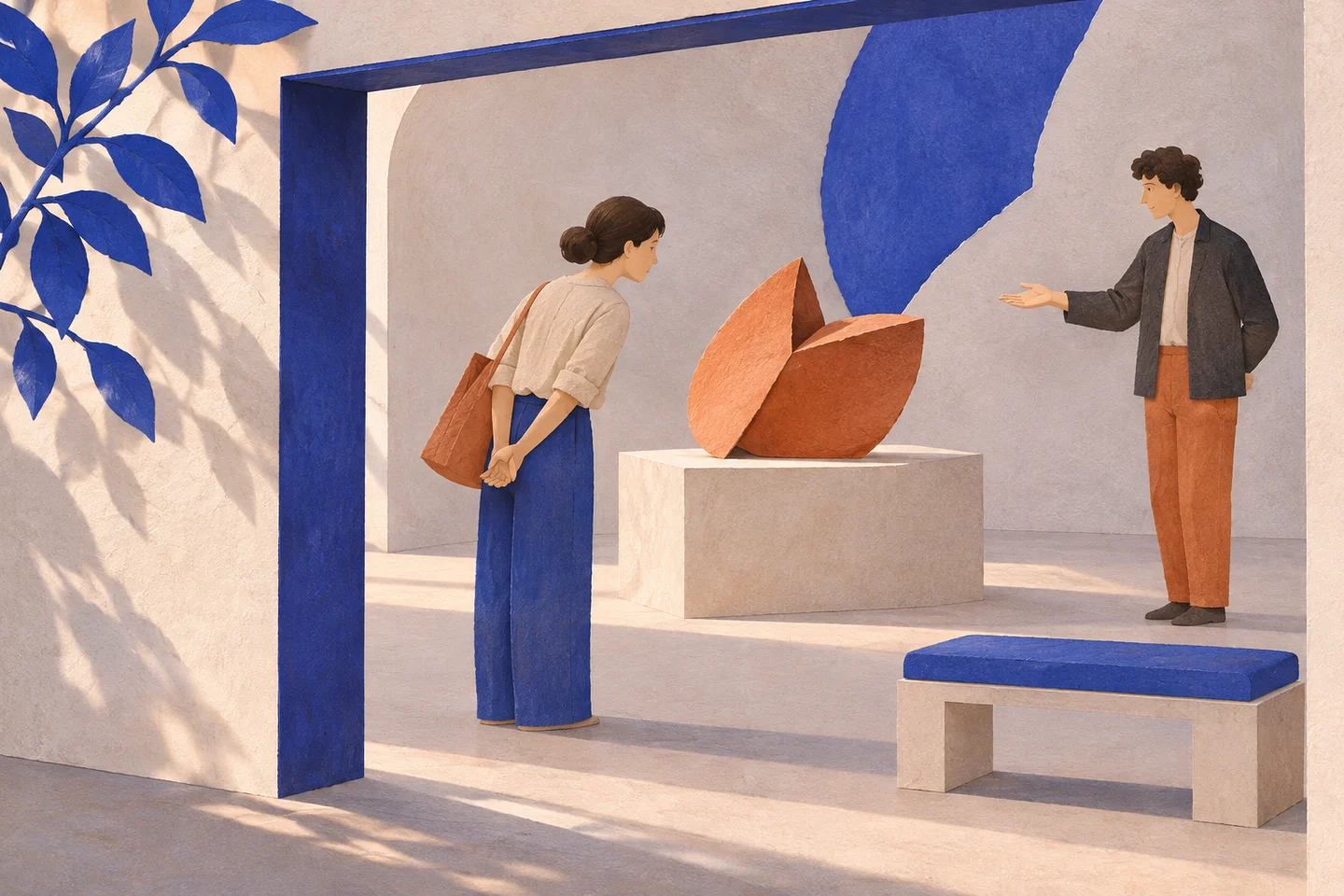
Someone enters the space and stands still. From a distance it might seem that interaction has not begun. But they are already choosing a distance, watching others and looking for a cue distinguishing an object to observe from one they can address.
The first minute in the title names this entry time, rather than a duration measured in research. To discuss it I prepared an imaginary installation model: a threshold, a small device and a space where someone can simply remain and watch.
Before asking for a gesture
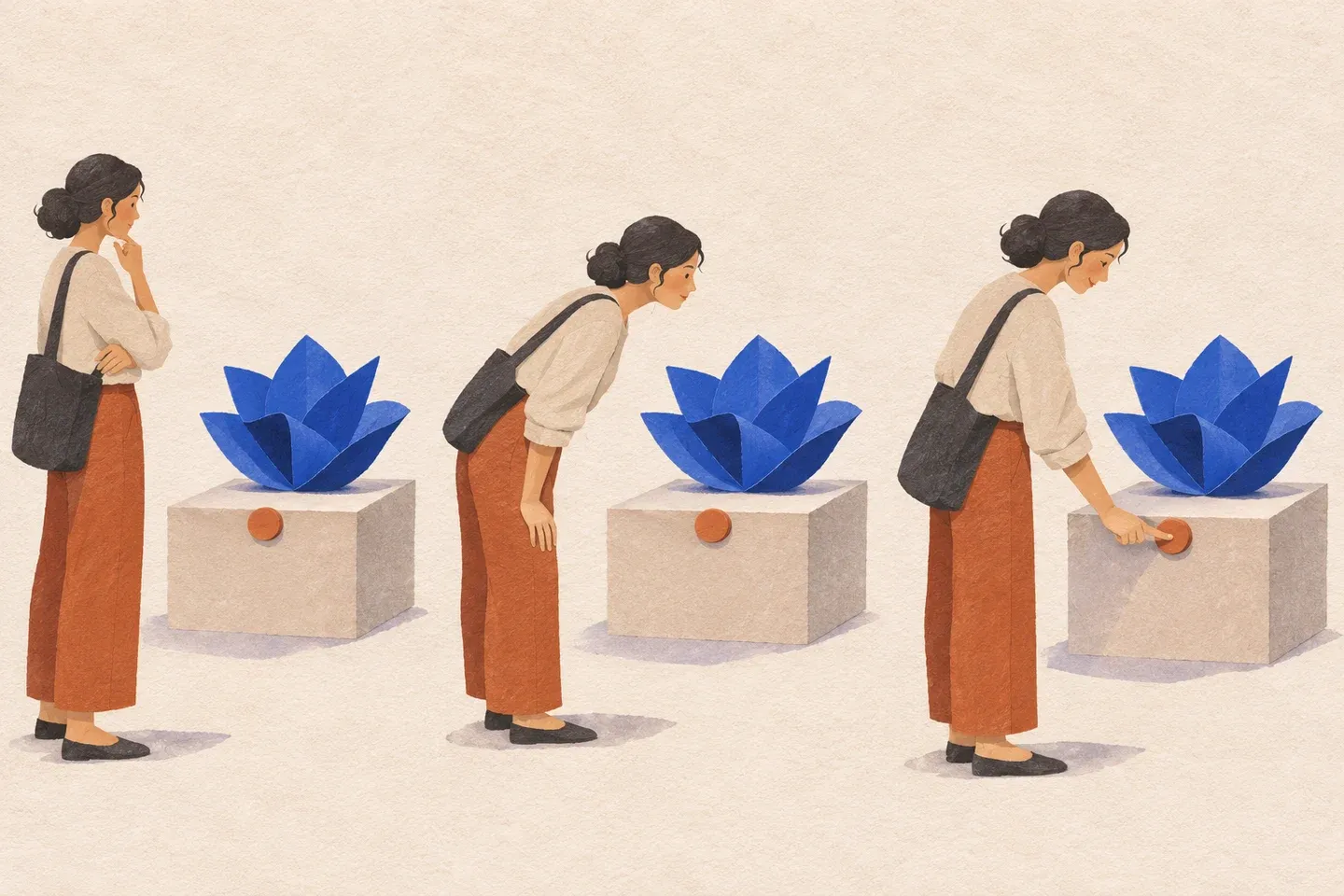
The example distinguishes three situations: arrival, observation and approaching a control. They are not compulsory stages for everyone. They help examine which information the environment offers before expecting a response from someone entering.
Arriving, watching, approaching
Arrival Observation First gesture
A cue can clarify that a device responds without anticipating every effect. An arrangement can reveal another person’s gesture without forcing an immediate approach. Curiosity needs a place to work from, which may differ from the place intended for action.
Watching can be a complete way of participating in the situation. If a design treats every wait as a mistake to correct, it risks confusing an experience’s intensity with the number of commands activated. Someone who does not touch may have encountered something the device does not record.
The invitation and its distance
The Smithsonian guidelines include accessibility and comprehensibility of interactive controls. This page’s model remains a proposal to test in actual space.
A sign can explain a control while remaining outside the place where someone would seek instructions. A light can attract without indicating where to put a hand. I would therefore examine the invitation together with the approach route, the opportunity to pause and the conditions of someone observing from a seat.
Instructions can become excessive too. If they describe every response in advance, the first action risks becoming confirmation of a script. Information necessary for acting needs distinguishing from what the work can let emerge through the encounter.
A threshold that does not close behind you
The two AI-generated illustrations show an imaginary installation. They document no exhibition or route tested with visitors. The sequence discusses planned positions while keeping the space from which people can merely watch visible as well.
In actual work I would examine entry before recording only successful interactions. Where does someone arriving stop? Which gesture seems possible? Can they change their mind without crossing an awkward passage? Answers require observation and actual trials, which this mockup does not replace.
A good invitation allows an approach without turning it into an obligation. The first gesture can then belong to the person, rather than being the only way out that the route has left them.