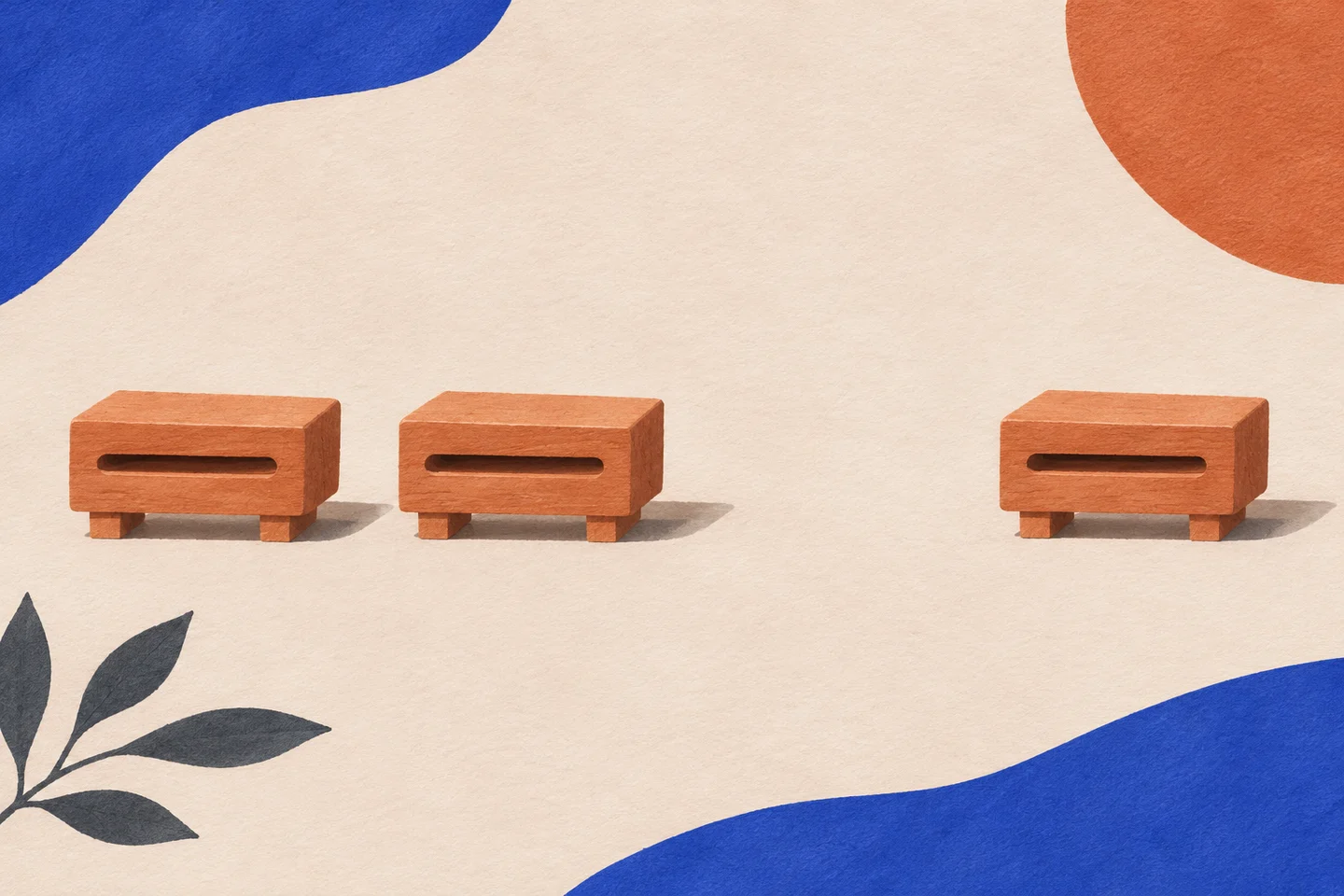
After the second sound there is room for a third. If it arrives soon, we may gather the three events into one brief gesture. If it is delayed, that gesture may already seem finished. We need not change the timbre to open another possible reading: we can alter the time we leave before the final event.
For this note I built three original synthetic sequences. They are neither environmental recordings nor musical examples taken from a work. The sounds remain the same; only one pause varies. This is a compositional comparison, with no collected responses or measured emotional effects.
Leaving an interval
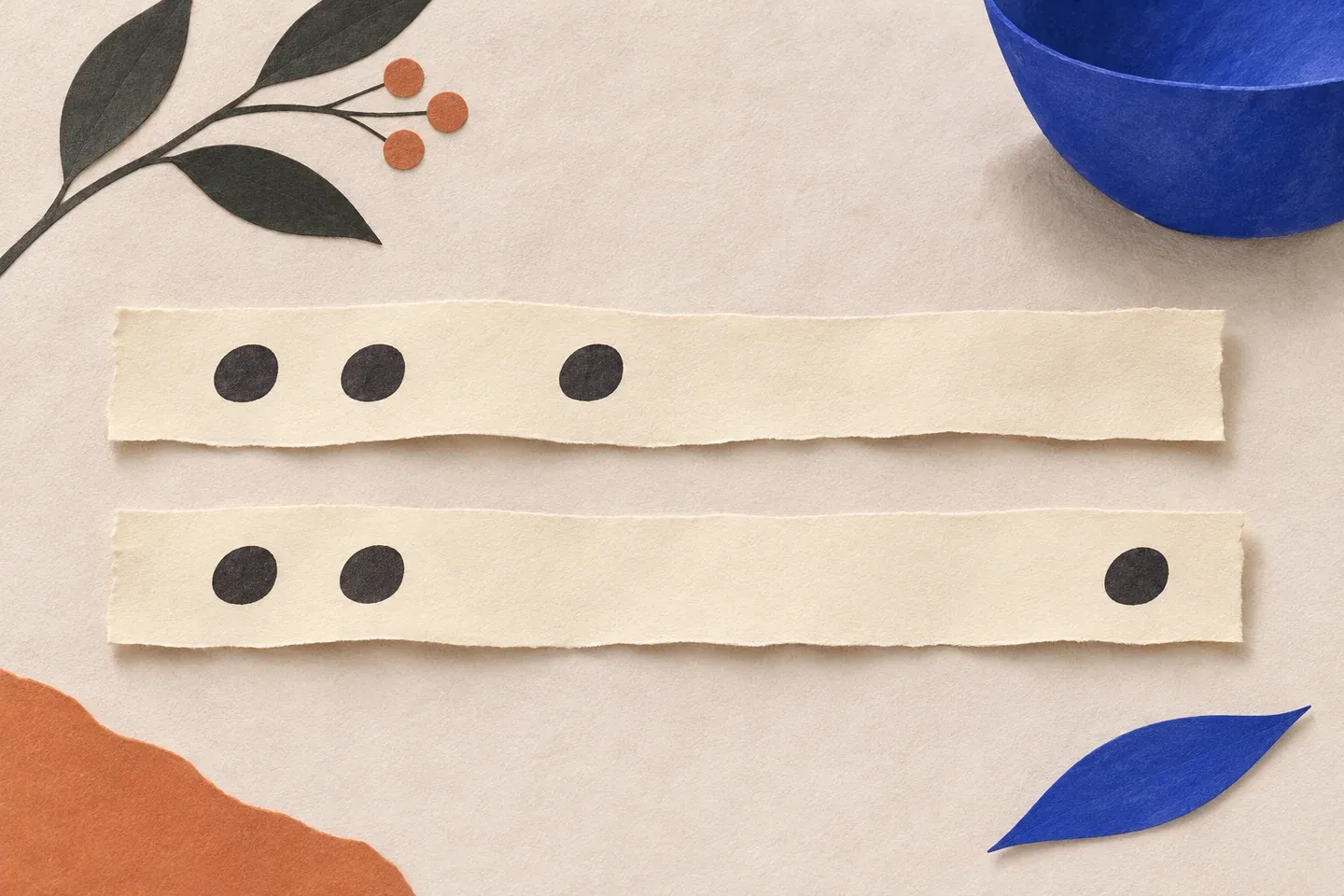
The first two pulses begin at 0.25 and 0.75 seconds. Each lasts 0.12 seconds. After the second ends, I insert 0.5, 1.5 or 3 seconds of zero-valued samples; the third pulse follows, identical to the preceding ones. All versions also retain the same brief final tail. Total duration changes with the pause: equalising it by adding silence elsewhere would introduce another choice.
The pause between the same sounds
Three identical 0.12 s pulses. The first two start at 0.25 and 0.75 s; the third follows the indicated pause after the second ends. Same amplitude, no voices or environmental recording.
Start one version, listen for the third event, then move to another. You need not find a predicted emotion. You can notice whether the interval still belongs to the same gesture or begins to separate two moments. The temporal description beside the players makes the choices knowable without listening too.
A pause belongs to the sequence’s form. It is not merely what remains when we stop filling it. Where it begins and ends establishes relationships with what came before and what is still to arrive.
Zero in the file, sounds in the room
Zero-valued samples have a limited technical meaning: that passage of the file does not contain the signal I synthesised. They do not guarantee silence in listening. The sounds of the room, device and surroundings remain; attention can also shift to something previously masked.
MoMA’s record for John Cage’s 4′33″ offers an important reference for this distance between the absence of intentionally produced sounds and listening to the environment. I do not perform the piece or reproduce its score here. Our comparison asks a narrower question: which relationship changes when we lengthen an interval within a constructed sequence?
Confusing these questions would give the small comparison borrowed depth. The reference to Cage helps us avoid treating silence as a substance identical in every situation; it does not justify calling every pause a repetition of his work.
The third sound arrives after memory
When we hear the second version, we already know there will be a third pulse. That knowledge enters the wait. Reversing the order can help us notice it, but does not restore listening without memory. Repetition belongs to the conditions; it is not a defect a reset control can erase.
Volume matters too. The files share the same pulses and amplitude, but I do not control the device setting or listening conditions. The comparison therefore concerns choices contained in the signals, not a sensation guaranteed by a number of seconds.
Deciding where it ends
Changing the pause can change the boundary we assign to the gesture. If the third pulse arrives after we thought everything had ended, it may open a new unit; if we were expecting it, it may close the preceding one. These are possible readings to examine in concrete work.
The design question remains small and demanding: how much time do I want to leave to what does not sound? The third pulse is the same. Before arriving, though, it must cross the space we prepared for it.