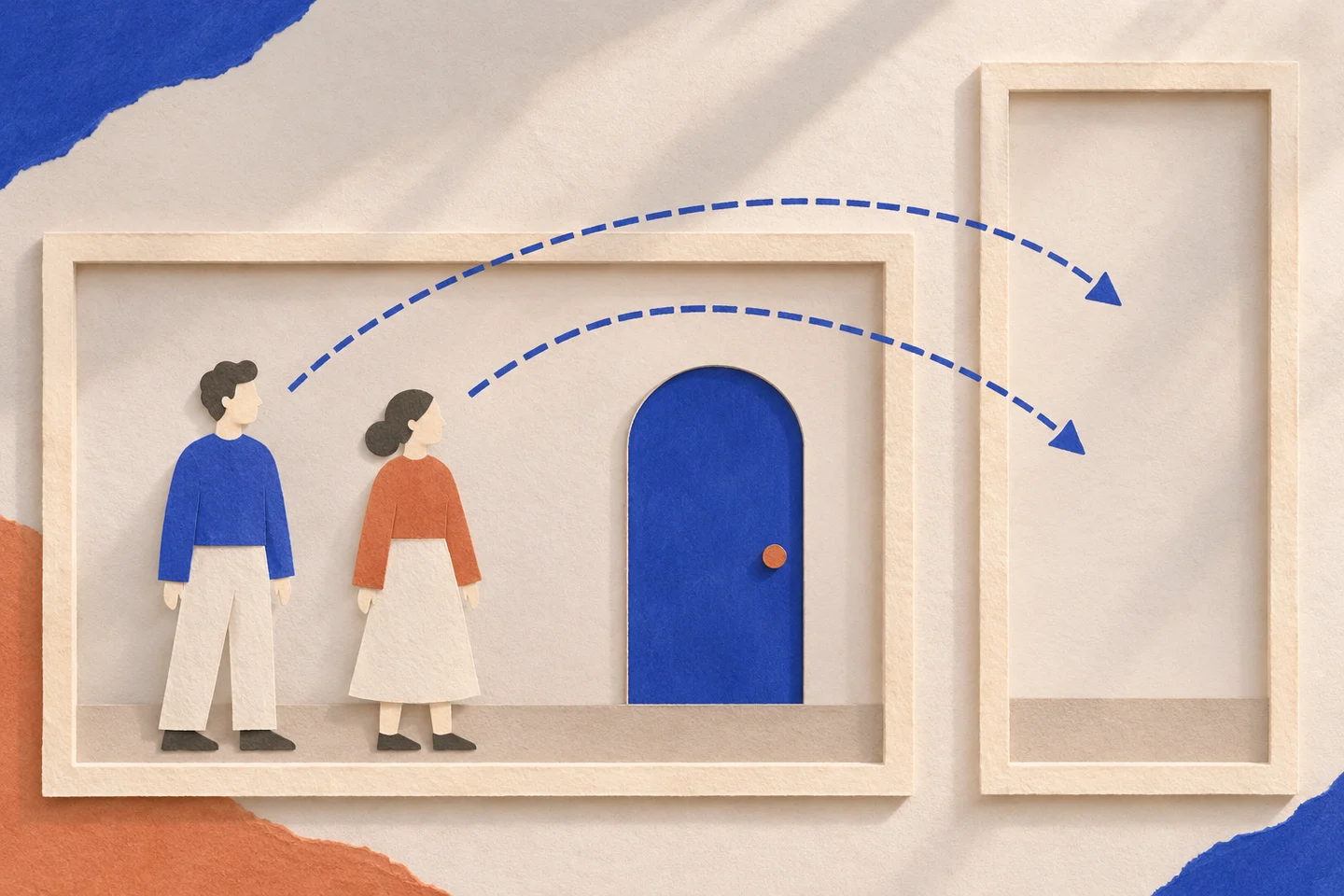
Two figures look at a door. In the wide frame they stand at the sides, and the space between them holds part of the waiting. If I crop the centre to obtain a vertical image, I might preserve the door and lose the relationship that made it interesting.
Changing format can therefore start from a question other than “what fits?”: what needs to remain understandable for this to remain the same scene? A face, a direction of gaze and an object may need new positions rather than a narrower rectangle.
Three moments, two compositions
I built an imaginary storyboard with three moments: two presences before the door, one approaching it and the empty place after the passage. The forms are drawn in code. The example compares 16:9 and 9:16 fields without presenting the sequence as footage actually filmed.
Two storyboard compositions
Horizontal 16:9
Waiting Approach Passage
Vertical 9:16
Waiting Approach Passage
In the vertical format I rearrange positions so the door and figures retain their relationship. I do not claim this can be achieved by cropping existing footage: a new arrangement may require another shot or another edit. The distinction between recomposition and cropping is the workshop’s central issue.
Preserving the main subject may not preserve the story. The second figure may be small, but remaining outside the door changes the meaning of the departure. Removing it because it occupies little space would be a narrative decision as well as a geometric one.
Empty space changes place
A tall composition offers possibilities of its own. It can emphasise a distance between above and below, lengthen a threshold or bring a presence in from a different edge. Treating it only as the surviving part of a wide field means giving up those relationships in advance.
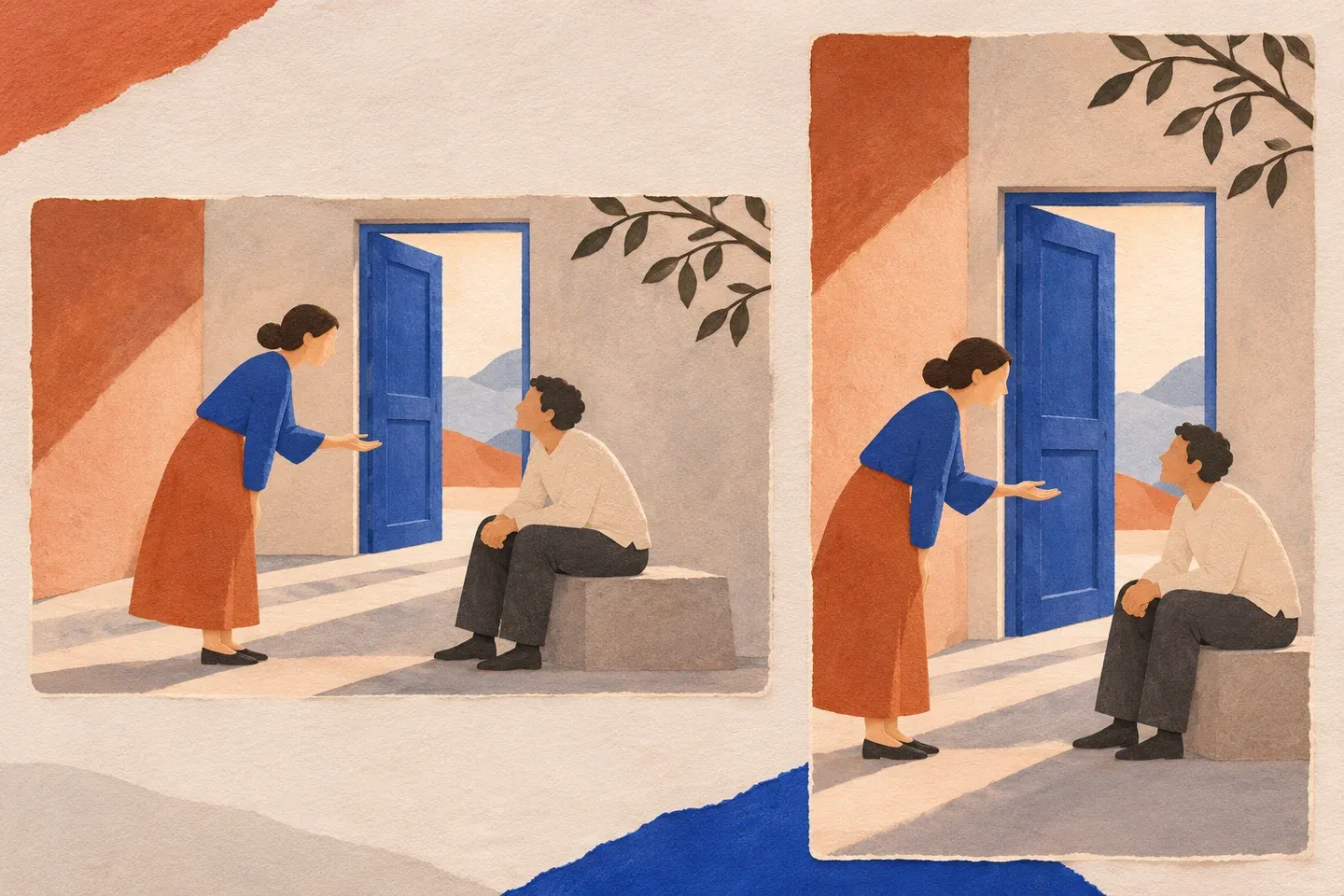
The sample keeps all three moments visible. We can return to the previous one and ask what has been preserved. Captions describe fictional actions; the two AI-generated illustrations accompany the problem of frames, without adding footage or audience data.
A format change can alter rhythm too. If two actions could be read simultaneously in a wide frame but require two views in a tall one, the edit introduces a before and an after. Duration is not automatically preserved just because the final file has the same number of seconds.
Deciding before the edge
For an actual production I would prepare at least one storyboard comparison before filming. I would identify essential relationships and details that can change position, then check that gazes and gestures still meet in the new composition. A safe-area rectangle overlaid on an image helps reveal a cut; it does not decide the story by itself.
The workshop does not compare two formats’ effectiveness with an audience. It shows an original choice and its limits: new geometries, the same fictional events, a different arrangement. The page preserves the possibility of reading both solutions without starting an animation.
A format becomes narrative when we assign relationships to it, rather than only objects to contain. The door may remain central. The space left for whoever stays outside tells us whether we have preserved the scene as well.