There is a closed paper bag on the bench. No people are visible. “A pause before setting off again” may suggest someone still nearby; “What remained after the departure” points towards absence. The image does not change. The sentences have introduced a before and after that were invisible in the blue wood or the paper’s edge.
This scene is an AI-generated illustration, not a news photograph. The captions were written for the comparison and report no real events. I chose an invented image precisely to keep the distance between description, narrative hypothesis and verified information recognisable.
Three texts, one image
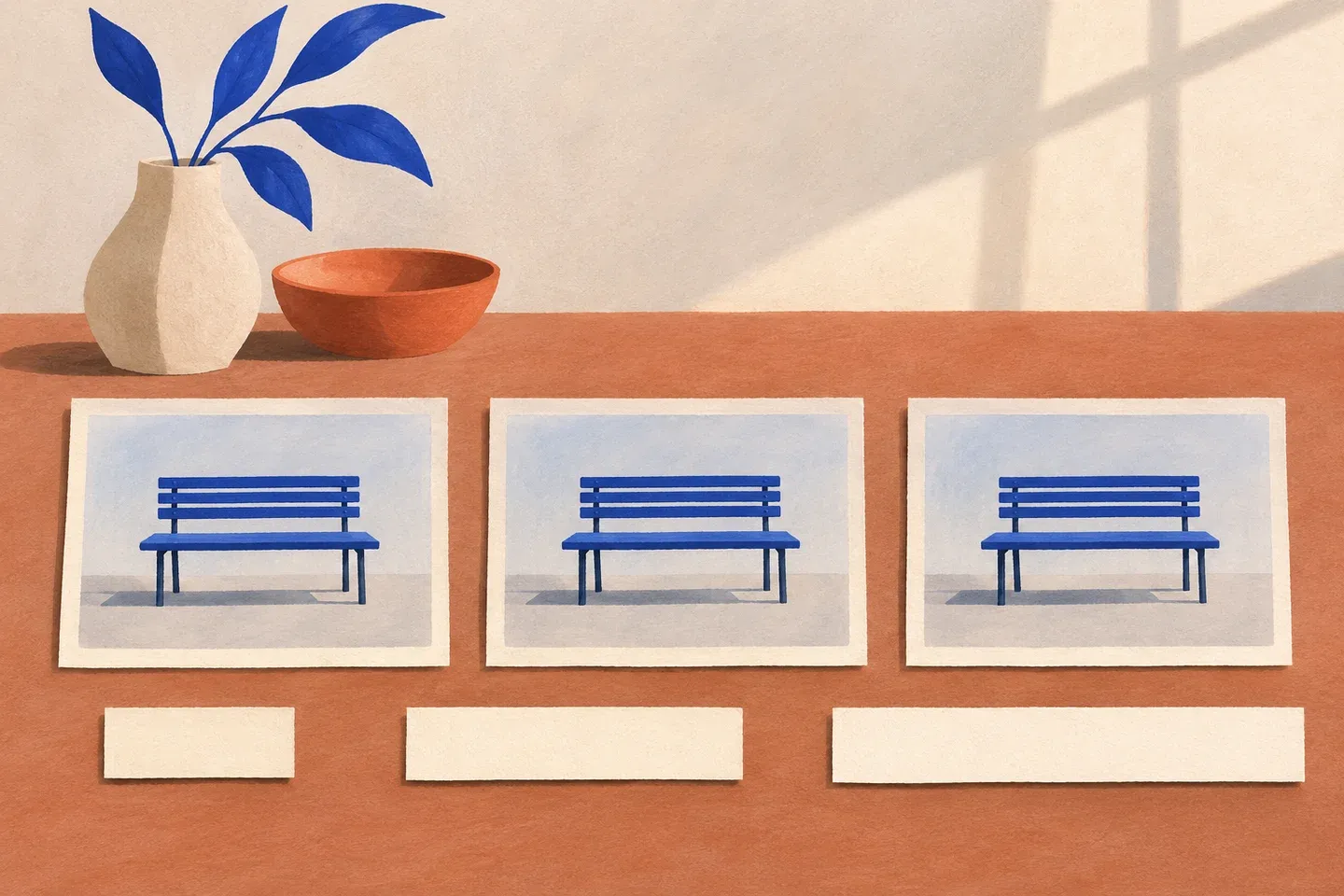
The comparison keeps the same file. The first text describes what the image shows: an empty bench and a bag. The other two suggest waiting and departure respectively. They are not real archive titles and add no information about the image’s production.
The same image, three texts
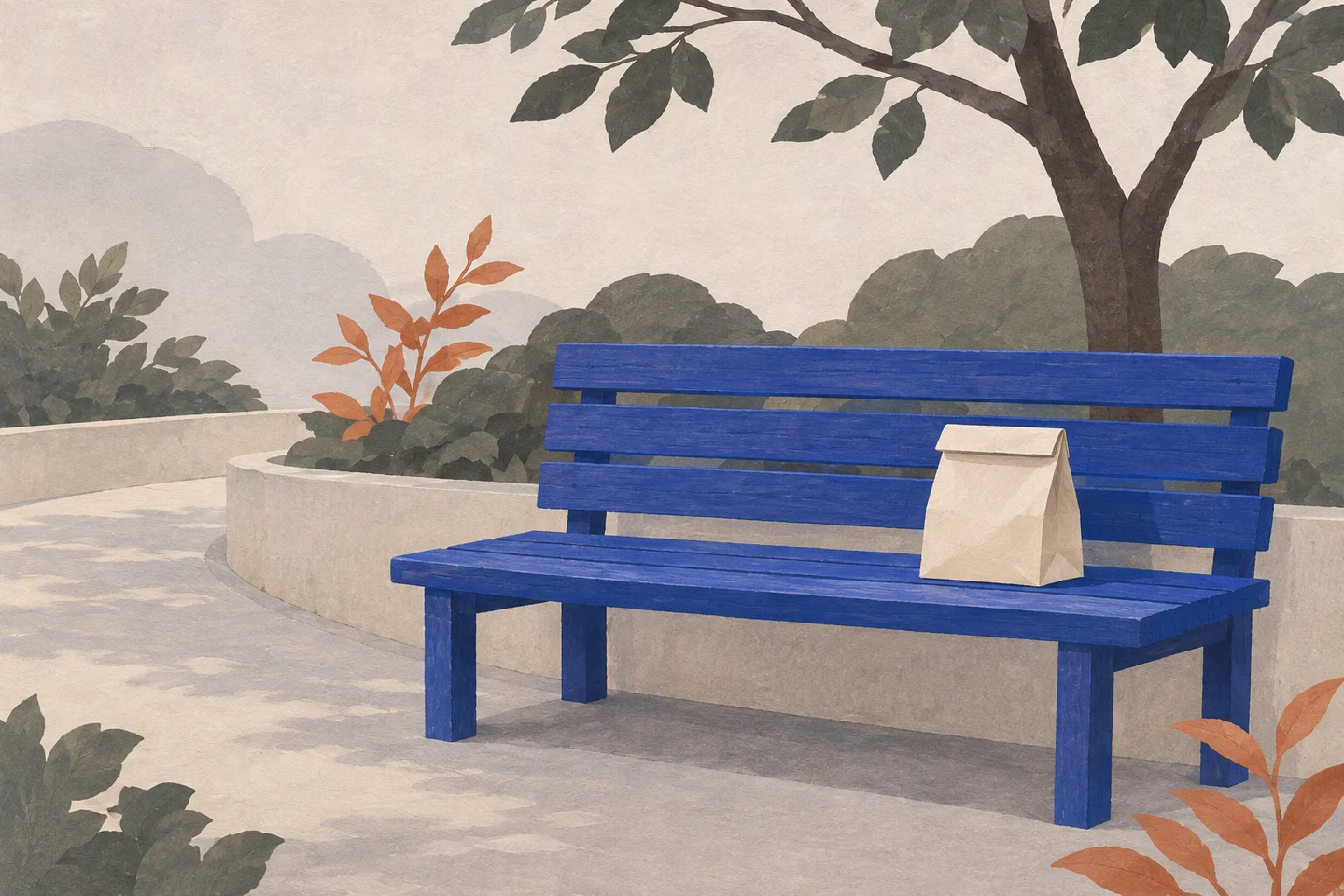
An empty bench with a closed paper bag.
AI-generated image. The three sentences were written for the comparison: none reports a real event.
Read all three texts
- Description: An empty bench with a closed paper bag.
- Hypothesis: waiting: A pause before setting off again.
- Hypothesis: departure: What remained after the departure.
Choosing a version changes only the text beside the image. All three formulations remain available below, with their roles declared. I do not measure how you read them or treat interpretations as compulsory responses. The comparison makes three acts of writing comparable, not three events.
A sentence can make a fact seem established when the image does not demonstrate it. Here the added fact is a departure or the presence of someone who will return. The bag alone certifies neither story.
Describing involves choosing
Even the most cautious sentence selects. It names the bag and leaves out the shadow; it counts the bench as empty without describing every plank. Describing does not mean escaping language, but making the relationship between chosen words and what is available to view recognisable.
The Australian Government’s Style Manual distinguishes the functions of alternative text, caption and title. This also helps us avoid asking one sentence to do everything. Alternative text should offer the relevant information in the image; the caption can connect it to the discussion and identify its origin. These tasks can meet without coinciding word for word.
This is why choosing a different version does not replace the real credit. The image remains identified as AI-generated in every state. A narrative caption gains no right to erase provenance: otherwise the workshop would use the ambiguity it tries to expose to make its own production ambiguous too.
Context can add evidence
A real photograph may have a date, author, location and testimonies absent from the image alone. Including them in a caption can be essential work. Caution does not mean merely listing visible objects; it means knowing where the added information comes from and how verifiable it is.
Here there is no event to return to. We cannot verify who left the bag, because nobody left it on a real bench during this illustration’s production. We can only observe how a sentence tries to organise the scene. Calling an invented story “context” would not turn it into a document.
Reading the seam too
The caption is part of the image we encounter publicly. Not because it becomes a pixel in the picture, but because it can direct us towards one relationship and away from others before we notice.
Rereading the three texts lets us return to the seam: where does what we see end, and where does what someone asks us to believe begin? The bench remains empty. What matters is preserving the possibility of asking that question even when the sentence sounds perfectly natural.